Showing posts with label faculty. Show all posts

Friday, August 19, 2011

IPE Faculty Update: Professor Emelie Peine

Professor Peine checks in with this report:

I wrote the first draft of a chapter for a book on the ethics of competition in the global agro-food industry that is based on research I did last summer in China looking at how transnational agribusinesses are integrating the Brazilian soybean export industry and Chinese industrial pork production. The book is edited by agricultural economist Harvey James at the University of Missouri and will be published by Springer.

I also submitted an article to the Journal of Appalachian Studies about the political economy of modern-day moonshining in east Tennessee that is based on my master’s thesis. The manuscript received a strong review, and my co-author Kai Schafft of Penn State University and I are currently working on revisions.

Early in the summer I enjoyed eating lots of fresh chard, kale, spring onions, lettuce, and spinach from the University garden, and I look forward to getting my hands dirty again soon with some more harvesting, weeding, and fall planting. If any IPE students want to get involved in the garden this fall, send me an email!

Thursday, August 18, 2011

IPE Faculty Update: Professor Brad Dillman

Here's an update from Professor Brad Dillman:

I continued research and writing on illicit trade, especially human smuggling and wildlife trafficking. It is surprising how much variation there is in almost all numerical data on illegal activities, so I have become interested in writing a chapter on the "politics" of illicit numbers.

I spent considerable time staying up to date on changes in the Arab world. Since the Tunisian uprising in January 2011 our understanding of Arab politics has been challenged profoundly. There are many new debates and interpretations among scholars of the Middle East--it's an exciting time to study the region.

In preparation for fall classes, I've read some of the newer writings on the financial crisis, global value chains, and constructivism. Those of you in my classes will get a chance to study some of these articles. It's also an exciting time to be studying the dynamics of the international political economy.

Wednesday, August 17, 2011

IPE Faculty Update: Professor Mike Veseth

Here's a quick update from Prof. Veseth

My new book Wine Wars came out in June so I've been busy doing interviews with newspapers, magazines and radio shows here in the U.S. and around the world (one chapter examines wine in China, so there's been a good deal of interest in Asia).

I spent several weeks in Italy where I chaired a session and gave a presentation at a wine economics conference. And I recently spoke at a reception for new alumni organized by the Portland chapter of the Puget Sound alumni association.

Now I'm gearing up for fall classes! I look forward to seeing all my students when classes begin.

Monday, August 15, 2011

IPE Faculty Update: Professor Pierre Ly

What have your IPE faculty been up to this summer? This is the first is a series of reports from our widely scattered faculty (who will reassemble on campus in a few days for the start of Fall classes).

Professor Pierre Ly's report focuses on his research.

I spent the first part of the summer revising and resubmitting a paper analyzing competition for funding between microfinance projects on Kiva.org, co-authored with Geri Mason from Seattle Pacific University. The revised paper has just been accepted for publication in the journal World Development.

I have also completed and submitted a paper on the governance of NGOs' commercial enterprises. In addition to finishing another paper, I am spending the last month of summer reading about the economics of networks, looking into a potential new collaboration.

I look forward to using what I have learned this summer to help IPE students develop their research projects this coming fall.

Monday, November 22, 2010

Rave Review for Prof. Grunberg's New Book!

Prof. Leon Grunberg is one of the founders of the IPE Program and Puget Sound and so we are pleased to celebrate the rave reviews that his new book is receiving. Here's what the New York Times says:

November 20, 2010

The Pain of Change at Boeing

ONCE upon a time, major American companies and their employees treated each other as family. The companies provided job security and lifelong benefits; in general, workers were loyal and engaged in their jobs, the occasional strike notwithstanding.

But that relative harmony ended with the advent of globalization, according to “Turbulence: Boeing and the State of American Workers and Managers” (Yale University Press, 238 pages), a meticulous and illuminating case study of the nation’s largest manufacturing exporter.

The book has four authors with a combination of academic and private-sector backgrounds: Edward S. Greenberg, Leon Grunberg, Sarah Moore and Patricia B. Sikora. Based on their research and experience, they write: “The very innovations and changes Boeing introduced to remain a leading producer of airplanes — altered management strategies, pervasive technological changes, extensive outsourcing, broad global partnerships, massive layoffs, and drastically altered ways of working — produced stress and turbulence in the lives of workers and managers alike.”

And the authors say Boeing’s woes are a cautionary tale for corporate America because the company suffered despite extraordinary advantages. “As one of only two manufacturers of large passenger jets in the world, Boeing occupies an extraordinary economic niche, and has had generally enlightened policies, along with strong unions to protect its employees,” the authors write. “Many American companies and their employees, in virtually every economic sector, face similarly strong competitive pressures but without Boeing’s advantages.”

The book focuses mainly on the period from 1996 to 2006, a span that encompassed the company’s merger with McDonnell Douglas, a strike by engineers and technical workers, ethics scandals in top management ranks, and the start of a major new passenger jet project, the 787 Dreamliner.

The research included four separate surveys, in 1997, 2000, 2003 and 2006. They tracked a cohort of 525 continuously employed Boeing workers and managers as well as scores of people who left the company during the course of the study.

After generally worsening between the first and the third surveys, employee attitudes toward the company showed some improvement by the 2006 poll, as some of Boeing’s changes took root. But according to the authors, morale issues remained.

One of the book’s most notable findings has to do with outsourcing. As seen in the production of the 787 Dreamliner, its new wide-body jet, the effects were decidedly double-edged. Two aims of the outsourcing were to cut costs and to gain access to more foreign markets; both of those goals were largely achieved.

But the parts contracts for the 787 were let to 135 sites in two dozen countries. In theory, the parts could be snapped and fitted together — much like pieces of a model airplane — at the Boeing plant in Everett, Wash. Yet in practice, the authors say, the process proved much more complicated, “something Boeing discovered to its considerable discomfort in 2008 and 2009 when many of the sections neither snapped nor fit properly.”) Production of the 787 would fall two years behind schedule.

Many survey respondents worried that outsourcing would result in “the bleeding of engineering knowledge and jobs to global partner companies, hurting both Boeing and the United States in the long run,” the book says. One engineer with 27 years of experience at Boeing opined that “we are giving away the farm.”

The authors found that the decision by top management to emulate the so-called “team” model, pioneered by Japanese companies like Toyota, had a generally negative effect on employee morale rather than promoting a sense of empowerment.

The authors write that “perhaps more in sorrow than in anger,” many people said that “the notion of Boeing as a family, where employees’ contributions were respected as a source of competitive advantage, was a thing of the past, replaced by Boeing as a team where people and positions were expendable or interchangeable with other workers around the world.”

Perhaps even more surprising was how disaffection with the changes at Boeing permeated every level of the company. “Importantly, at the end of our study period, there was no statistical difference between the number of managers and nonmanagers regarding their intentions to quit Boeing,” the authors report, later adding that “as the organization flattened, the career ladder became compressed to a step-stool; many managers and employees felt dead-ended as opportunities for advancement seemed to evaporate.”

FOR an academic study, “Turbulence” is refreshingly accessible, with a coherent narrative punctuated by no more than the minimally requisite charts, and only occasionally marred by overworking a comparison of the company-employee relationship to a failed marriage.

The interview excerpts are often heart-wrenching, and the long-term, disciplined nature of the authors’ research gives their findings credibility. For these reasons alone, “Turbulence” should be required reading for anyone at a major American corporation, especially in top management.

Arguably, the single glaring weakness is in the book’s prescription for fixing the workplace. Insisting that neither companies nor employees can go it alone, the authors call for government to protect American workers and provide employment opportunities through “safety net programs based on pooled-risk insurance principles.”

That may sound like an ideal combination of the family model and the team model. But given the outcome of the recent midterm elections, any proposal to enlarge the role of government in the private sector is not something the American public is likely to buy into anytime soon.

Wednesday, September 01, 2010

Prof K Receives President's Teaching Award


Congratulations to IPE Professor and Director Nick Kontogeorgopoulos! Puget Sound President Ron Thomas presented him with the President's Excellence in Teaching Award at a faculty dinner last Tuesday.

The award, which is the University's highest recognition for teaching, was created in 1997 to recognize faculty with "a passion for teaching, the ability to inspire and the ability to challenge and motivate students."

Professor K's students will certain agree that Nick fits the bill perfectly. Hats off to Prof K!

Thursday, February 18, 2010

Where in the World is Prof. Andrew Gardner?


Here's an update from Prof. Andrew Gardner. The photo shows Prof. Gardner and wife Kristen in Kathmandu, Nepal, where they met IPE alumni Cort Weber and Mandy Jacobsen. Mandy is cultural attache at the U.S. Embassy to Nepal and Cort teaches history at an international school in Kathmandu. (Astrid Gardner took the photo!) Here is Prof. Gardner's report.
I was recently in Nepal conducting fieldwork for a research project funded by Georgetown-Qatar's Center for International and Regional Studies (CIRS). My grant was one of four awarded under CIRS's Migrant Labor in the Persian Gulf program. The project I'm conducting is entitled "A Longitudinal Analysis of Low-Income Laborers in Contemporary Qatar," and this project has allowed me to closely follow ten low-income labor migrants through a year of their life here in Qatar.

My intention is to use this project to examine and explore how the problems and challenges typical in the experiences of these unskilled migrants unfold in their lives, while also mapping the strategies they deploy in their attempts to address those issues. The grant includes funding for three trips to visit with the families these Gulf migrants have left behind in South Asia.

Our recent trip to Nepal was the first of these three trips. Half of the ten participants in the project come from Nepal, and we were able to visit with all five of these families over the two weeks we spent there. Four of these five families live in the Terai, the agriculturally-rich but politically volatile low plain along the Indian border. The final family lives in the highlands above the Gurkha region.

Before departing for the countryside we spent a few days in Kathmandu, where we met up with Amanda Jacobsen (IPE '99), Cort Weber (IPE '99), and their lovely family. Amanda is the Cultural Affairs Officer at the American Embassy in Nepal. Cort teaches History, Geography and English at the American-curriculum Lincoln School in Kathmandu. While their guidance and advice proved essential in successfully navigating the many challenges we faced in conducting this fieldwork, it was also nice to cross paths with a pair of Puget Sound graduates on this side of the globe.

Thursday, February 11, 2010

Prof DeHart's New Book is Out!

Professor Monica DeHart's new book on Ethnic Entrepreneurs: Identity and Development Politics in Latin America has recently been published by Stanford University Press.

Here's a quick summary of the new book:
Indigenous groups are not often recognized as driving forces in the push for economic development. However, in development efforts across Latin America, governments and corporations have begun to see ethnic cultural difference as an advantage. Ethnic Entrepreneurs explores how diverse groups historically seen as obstacles to development have become valuable to state and regional development initiatives.

From collaboration between a Maya organization and Walmart to a UN-sponsored program that recruits diasporic Latinos, states and corporations are pursuing strategies that complement regional neoliberal shifts. This book examines how ethnic difference is produced through development policy, breaking down the micropolitics of identity and development. It uncovers surprising convergences between ethnic community businesses and corporate social responsibility practices and illuminates how formulations of ethnic difference influence not only changing cultural identifications, but also the political and moral projects that shape Latin America.
And some initial reactions:
"Ethnic Entrepreneurs provides an innovative analysis of how the flexibility of ethnic difference is mobilized as a resource both by indigenous, Latino, and Latin American subjects as well as by development institutions and organizations. By highlighting how the contradictions and assumptions behind categories such as indigenous, Latino, Latin American, migrant, and immigrant are related to global practices of corporate marketing and corporate responsibility, DeHart helps us rethink the links between community and corporation. This book offers an ethnographically rich window on global processes of ethnic identity and entrepreneurship."—Lynn Stephen, University of Oregon

"Once the very idea of the Ethnic Entrepreneur would have been an oxymoron. Local knowledge, kinship, and communal ties were seen as primary obstacles to modernization. Now, in Latin America, ethnic subjects are widely regarded as essential agents of development. In exploring the shifts that have made this transformation possible, Monica DeHart provides an enlightening account of the ways in which ethnic identity, market forces, and development strategy are reshaping each other in neoliberal times."—Jean Comaroff, University of Chicago
Congratulations, Prof. DeHart!

Wednesday, December 23, 2009

The Crash of 2008 and the Future of Globalization

Professor Veseth's new book, Globaloney 2.0: The Crash of 2008 and the Future of Globalization, has just been published by Rowman & Littlefield. It is available from online booksellers now and in select bookstores after the first of the year.

Globaloney 2.0
is a major revision of Prof. Veseth's 2005 book Globaloney, which was named a best business book of 2005 by Library Journal.

Here is the a brief description of the book:

The idea that there is no alternative to the global market is dead for now as the world economic crisis has unmasked that “globaloney.” Globalization is in retreat, but history tells us that this is but a temporary reversal. Globalization will return, but in what form? More cycles of boom and bust? Or can globalization be rebuilt on a more feasible and sustainable platform? These are the compelling questions that Michael Veseth tackles in this thoroughly revised and updated edition of his award-winning book.

Veseth shows how pre-crash visions of globalization were based on three powerful myths: that global finance was a stable foundation for a global economy, that global markets homogenized and Americanized the world, and that globalization itself was irresistible—impossible to shape or oppose at any level from the grassroots on up. The world economic crisis has revealed globalization’s Achilles heel: the fundamental instability of global financial markets and the unsettled foundation of economic globalization generally. This realization is a necessary first step, but it alone is not enough. We must rethink the rest of globalization’s myths, Veseth persuasively argues, if we want to move beyond boom and bust to a sustainable global future.

Here is the chapter outline.

Introduction.

  1. Globalization? Or Globaloney?
  2. Financial Globaloney: Safe as Houses.
  3. The Crash of 2008 and the Global Market Myth.
  4. Golden Arches Globaloney.
  5. The Only Game in Town.
  6. Grassroots Globaloney.
  7. Slow-balization: Using Globalization to Fight Globalization.
  8. Globalization and the French Exception.
  9. The Future of Globalization (and Globaloney)

Prof. Veseth will give a Brown Bag talk about his new book early in the Spring 2010 term.

Tuesday, November 17, 2009

World Hunger and Food Crisis talk on 11/17

IPE Professor Emelie Peine will be giving a talk entitled “World Hunger and the Food Crisis: vulnerabilities in the global food system” tonight at 7:00 in the Murray Board Room. This talk is part of a series of events planned by the office of Spirituality, Service and Social Justice in recognition of National Hunger Week.

Tuesday, June 30, 2009

Changing of the Guard


Mike Veseth is stepping down as International Political Economy Czar after 20 years in the directorship. Starting tomorrow (July 1, 2009) Professor Nick Kontogeorgopoulos (photo left) will be the IPE Program's academic leader.


Hail to the (new) chief!

Tuesday, March 24, 2009

Emelie Kaye Peine to replace Dave Balaam

As most of you know, Professor Dave Balaam is retiring at the end of this academic year after a distinguished career at Puget Sound. Although no one can ever really take Dave's place in IPE at Puget Sound, we are very fortunate to have hired an outstanding new professor who will fill Dave's faculty position and bring her own distinct skills, interests and values to our program.

That new professor is Emelie Kaye Peine. Professor Peine earned her Bachelor of Arts degree in political economy and development at the Evergreen State College in Olympia, Washington. Her Masters and PhD degrees are in Development Sociology from Cornell University in Ithica, NY. Her doctoral dissertation is titled "The Private State of Agribusiness: The Public Authority of Private Regimes in the Soybean Industry of Mato Grosso, Brazil." She is currently visiting assistant professor at Deep Springs College.

Professor Peine's fall teaching assignment includes two sections of IPE 201 and one section of IPE 331: The IPE of Food and Hunger. We are all really pleased that Professor Peine will be joining us in the fall and we look forward to introducing her to all of you.

Thursday, January 29, 2009

Agribusiness, Global Public Health and State-Market Formation

Everyone is invited to attend these upcoming research presentations by candidates for the IPE faculty position.

Friday, January 30 at 4pm in Mc307.
EMELIE KAYE PEINE (Ph.D. Candidate, Cornell University, visiting professor Deep Springs College) will discuss "The Private State of Agribusiness: Brazilian Soy on the Frontier of a New Food Regime."

Wednesday, February 4 at 4pm in Mc309.
HADII MAMUDU (Ph.D. West Virginia University, Post-doctoral fellow, Center for Tobacco Control Research and Education and Institute of Health Policy Studies, University of California at San Francisco) "Tobacco Control: A Global Public Health Issue."

Thursday, February 5 at 4pm in Mc307.
ABHISHEK CHATTERJEE (Ph.D. Candidate, University of Virginia, visiting professor at Goucher College) will discuss "State Formation and Market Formation in Comparative and Historical Perspective."

Monday, December 15, 2008

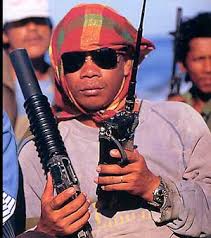
Somali Pirates Brown Bag 1/21

Mark you calendars! The IPE Brown Bag series will resume on January 21/2009. IPE Professor Brad Dillman will present “The Somali Pirates: Confronting International Norms, Maritime Transport, and the World’s Neglect”

Prof. Dillman will discuss the challenges that Somali pirates are posing to shipping in the Gulf of Aden and what their actions reveal about failed states, international law, and the responsibilities of powerful countries.

1:00 pm on Wednesday January 21 in WSC 101.

Friday, February 15, 2008

Iron Ladies of Liberia on February 21 at PLU

Everyone is invited to a preview screening of the PBS independent documentary Iron Ladies of Liberia on Thursday, February 21 at 7pm in Ingram 100 on the Pacific Lutheran University campus.

After nearly two decades of brutal civil war, Liberia is a nation ready for change. On January 16, 2006, Ellen Johnson Sirleaf was inaugurated the country’s first elected female president and Africa’s first freely elected female head of state. A Harvard-educated economist and grandmother of eight who had been exiled to Nigeria and nicknamed the Iron Lady, Johnson Sirleaf won a run-off election with 59 percent of the vote, but faces enormous obstacles in rebuilding a war-torn country.

Despite massive support both in Liberia and abroad, Johnson Sirleaf must not only find ways to reform a corrupt authoritarian government saddled by astronomical debts, but must also confront opponents loyal to former President Charles Taylor—all without alienating her voter base.

Since taking office, Johnson Sirleaf has appointed an unprecedented number of women to leadership positions in all areas in the Liberian government. With the exclusive cooperation of President Sirleaf, IRON LADIES OF LIBERIA goes behind the scenes of this groundbreaking administration during its first year, as it works to prevent a post-conflict nation from returning to civil war.

This film will be shows on PBS at 9pm on March 18 as part of the Independent Lens series.

Friday, August 17, 2007

Veseth Interviewed on Global Wine Market

Foreign Policy magazine recently interviewed IPE Professor Michael Veseth about the rapidly changing global market for wine for its popular "Seven Questions" online feature. You can read the interview at www.foreignpolicy.com
Professor Veseth writes a blog about his wine and globalization research. It is called Grape Expectations.

Thursday, June 07, 2007

New Edition of IPE Textbook

The 4th edition of Introduction to International Political Economy is due to be published later this month. As most of you know, this is a project of the IPE faculty at Puget Sound -- a book we originally wrote for our UPS classes and students, which is now used at more than 200 colleges and universities around the world. A portion of the royalties from the textbook go to support IPE program activities, including our summer research fellowship program. Here are the details:

Introduction to International Political Economy 4/e by David N. Balaam and Michael Veseth

In collaboration with Professors Brad Dillman, Monica DeHart, Karl Fields, Nick Kontogeorgopoulos, Sunil Kukreja, Patrick O'Neil, & Ross Singleton of the International Political Economy Program at the University of Puget Sound

Publisher: Prentice Hall
Copyright: 2008
Format: Paper; 528 pp

ISBN-10: 0136155634
ISBN-13: 9780136155638

For one semester/quarter courses in International Political Economy in Political Science, International Relations, and Economics departments as well as International Studies Programs.

A true introduction to the international political economy (IPE), the text does not assume that students have a background in politics, economy or sociology. This book clearly shows students how politics and economics come together in today's global environment. The text demonstrates how an understanding of IPE can help students make sense of global news, business investments, and government policies—by presenting the theories, institutions, and relationships found in IPE in simple ways that retain the complexity of the world issues and intellectual problems addressed.

You can find more information and a table of contents on the IPE Textbook home page or the Prentice Hall home page.

Monday, June 04, 2007

IPE: It's a Small World

Professor Dave Balaam ran into Jessica Fritz and Stefan Hoerschelman (both IPE class of 2005) at a street market in Salzburg, Austria. If you have "small world" photos of IPE majors or alumni, send them to us at ipe@ups.edu

Monday, May 07, 2007

Veseth Named to Albertson Professorship

From President Thomas:

Dear Colleagues,

I am very pleased to announce that Michael Veseth has been named the next Robert G. Albertson Professor. I have made this appointment after receiving the recommendations of a faculty committee consisting of Barry Anton, Mott Greene, and Ken Rousslang, chaired by Kris Bartanen, and on my own review of Professor Veseth's outstanding record over a thirty-one year career at Puget Sound.

The donors who endowed the professorship wanted to honor members of the faculty "who are personally and professionally committed to undergraduate teaching and teaching excellence." In addition, they wished to recognize a member of the faculty whose work is rigorously interdisciplinary.

During his five-year term, Professor Veseth will contribute new courses to the Core curriculum at the lower division and upper division levels, including both Connections courses and Scholarly & Creative Inquiry Seminars. His particular focus will be on helping students to understand more fully complex tensions of globalization through analysis of ordinary structures of everyday life, including soccer, wine, and the European Union. As the university moves forward to enrich its distinctive disciplinary and interdisciplinary strengths in globally-focused education, Professor Veseth's work on the conflicts and contradictions highlighted by processes of globalization is timely and creative. His selection emerged from an extraordinary pool of nominees for the position that presented a daunting challenge to the committee.

Mike Veseth returned to Puget Sound in 1976, after earning a bachelor's degree in economics and mathematics here in 1973, and M.A. and Ph.D. degrees in Economics at Purdue University in 1974 and 1975, respectively. With the collaboration of faculty colleagues across several departments, he founded in 1994 the International Political Economy program, a program that is now among Puget Sound's five largest in terms of graduating majors. Mike is a legendary teacher and prodigious scholar, having authored or co-authored with Puget Sound colleagues several widely used textbooks in Economics and in IPE and published other scholarly work, including, most recently, the acclaimed Globaloney: Unraveling the Myths of Globalization. He has been recognized by students with several teaching awards, and has received invitations to lecture for regional, national, and international events; in the summers of 2005 and 2006 he served as Economics Professor for the American Institute on Political and Economic Systems in Prague.

When Mike's term as Albertson Professor begins in 2008-2009, he will be the fifth member of the Puget Sound faculty to be honored as Robert G. Albertson Professor. The inaugural recipients of this significant recognition were Professor of Physics Jim Clifford and Professor of English Frank Cousens, followed by Professor of History Terry Cooney (who vacated the chair during his tenure as Dean) and Professor of History Suzanne Barnett. Having recently celebrated the remarkable life of Bob Albertson and his intense dedication to students and to the enduring power of the liberal arts, we take special pride in what this chair represents about our faculty and offer our warmest congratulations to Mike Veseth on being named to it.

Ron Thomas

Thursday, April 12, 2007

Balaam in Bologna

Professor Dave Balaam is alive and well and living in Bologna, Italy this semester, where he is a Fulbright lecturer in U.S.-E.U. relations at the University of Bologna. Dave is lecturing widely in Italy in addition to teaching his class. You can see some photos of and by Dave at this Shutterfly address.