Monday, January 30, 2012

First IPE Brown Bag Talk of Spring

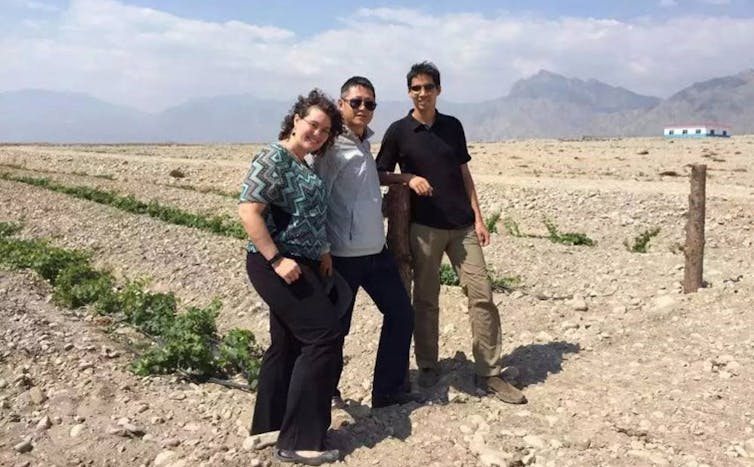
Please join us for the first brown bag talk of the Spring on Wednesday, February 1st at 1 pm in the Murray Boardroom. IPE Senior Sally Judson will discuss her summer research in Turkey where she examined why the accession negotiations between Turkey and the European Union have frozen. Turkey’s long march towards the EU has resulted in the nation becoming the most controversial accession candidate today. Many scholars have argued that due to the EU’s hesitancy, Turkey is turning its back on the West and moving its attention to Middle Eastern neighbors. She found that despite the multiple obstacles to membership and lack of momentum, neither Turkey nor the EU is likely to halt the negotiation process.

Tuesday, January 24, 2012

IPE Summer Research Fellowship Deadline is Approaching

The deadline for applications for $4000 IPE Summer Research Fellowships is approaching. Applications are due by noon on Wednesday, February 22 , 2012.

For more information on the IPE summer grant program and to find links to other university-sponsored summer grant opportunities, please see http://www.pugetsound.edu/academics/departments-and-programs/undergraduate/ipe/summer-research-fellowship/

Monday, January 23, 2012

IPE Alumna Update

After graduating in 2003, Abby Ormsbee Isaacson spent four years as Program Director of a local nonprofit serving children with HIV/AIDS and their families. She and her husband then moved to Boston where she received her Master of Public Health degree. They have recently settled in her home state of Colorado with their first little one, Avery, while he pursues his Masters in Religious Studies. She continues to network, volunteer and job search in the nutrition and HIV/AIDS field in Denver while enjoying mothering, hiking, sewing and cooking. They look forward to returning to the Northwest in the future.

Wednesday, December 07, 2011

IPE Alumni Update

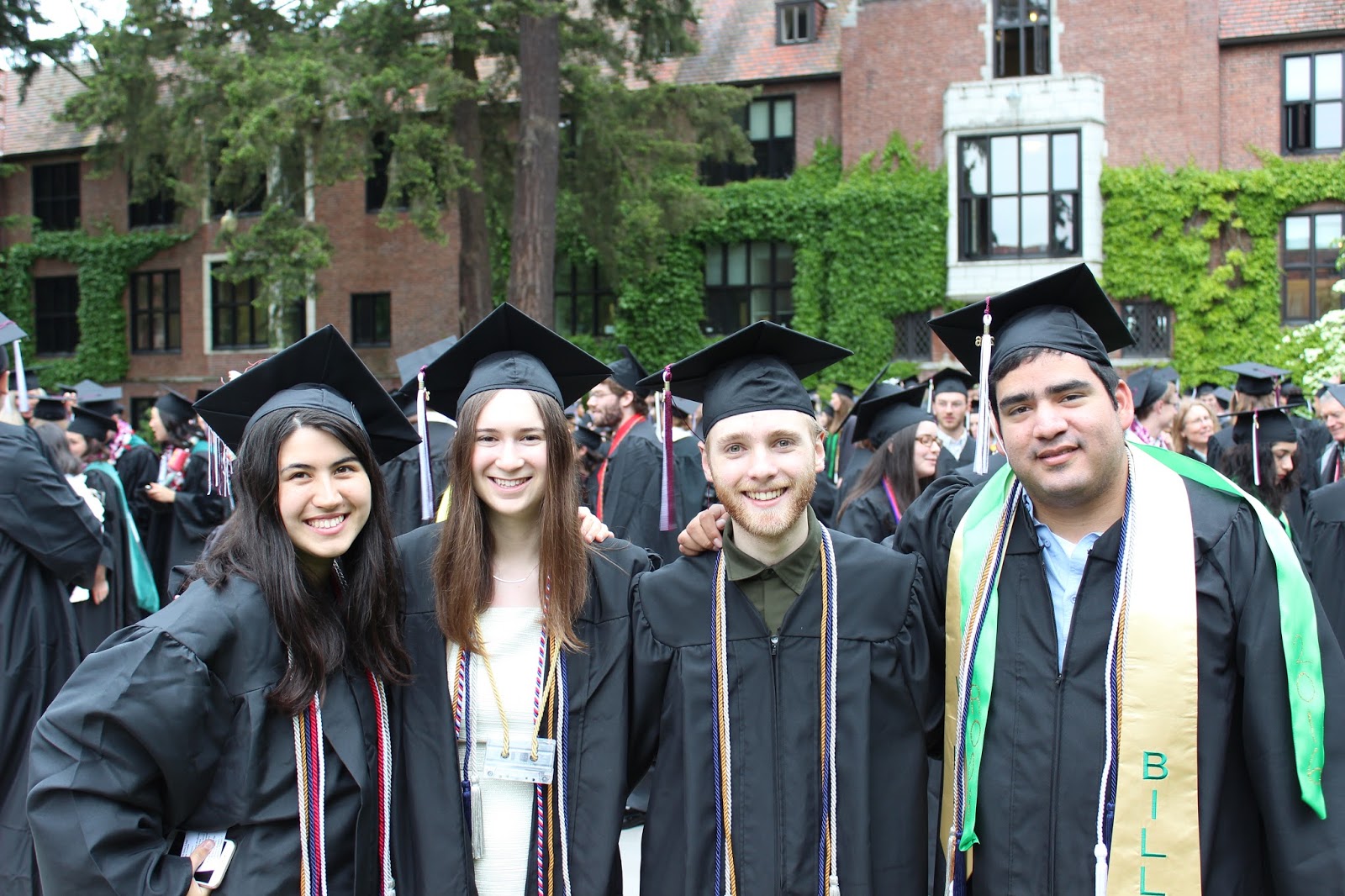
After graduating from Puget Sound in 2008, Emily Noel (pictured on left) earned her MSc in International Political Economy from the London School of Economics. Returning to Seattle she then interned with the World Affairs Council and the Washington State Department of Commerce. She now works as the Development Coordinator for a local outdoor education and conservation organization.

Jessica Bruce, class of 2008, served as a Peace Corps volunteer in Benin, West Africa from 2008-2010, where she worked with small businesses, NGOs, and local governments on a range of community development issues. She then completed an MSc in Economics as a Rotary Ambassadorial Scholar at the University of Nottingham in England. She is currently living in London where she is interning as a commodities analyst.

Friday, December 02, 2011

2012-13 Study Abroad Deadline is January 17!

This just in from International Programs:

If students want to study abroad during the summer 2012, the fall 2012 or the spring 2013 they MUST turn in their Approval to Apply Form by January 17, 2012.

Click here for the Approval to Apply Form

Forms should be returned to the Office of International Programs (215 Howarth). Students can also email the forms to the office.

January 17, 2012 is the first day of the spring 2012 semester.

Wednesday, November 09, 2011

Bill Campbell Fund for Study Abroad

This just in from Prof. Greta Austin ... funding to help you get the most from your study abroad experience!

Please encourage students going on study abroad next spring or fall to apply to the Bill Campbell Fund of Phi Beta Kappa, the academic honor society, for research funding or continued study.

The Campbell Fund funds research for one or two Puget Sound students who are studying abroad. The purpose of the grant is to give students a chance to extend the period of their study abroad program in order to complete a special project or course of study. Awards typically range from $500-$1,500.

In 2010 two students received scholarships totaling $2100 for research on young Japanese recluses and on open-air markets in France. The application form is attached below. It requires a two-page description of the research project and the budget. Students should apply directly to Greta Austin (CMB 1028/ggaustin@pugetsound.edu) by November 15, 2011.

Thanks for your help,

Greta

Greta Austin / Chair, PBK Scholarships Committee / Associate Professor, Department of Religion, CMB 1028

>>><<<

BILL CAMPBELL MEMORIAL FUND

Application Form


The Bill Campbell Memorial Fund was established by his wife, Nelly Campbell, and his many friends around the world. Bill was an educated, cultured, and international man who personified the goals and aspirations of the University. His love of learning was not limited to his area of scientific research but embraced the full range of human experience. Because of his outstanding contributions to science and the University, he received an honorary degree from Puget Sound in 1992. The Bill Campbell Fund ensures that Bill’s passion for learning and sharing ideas, his enthusiasm, his courage, his love and concern for the environment will be passed from generation to generation of Puget Sound students and that he will occupy a place at the heart of the University.


The Fund makes grants to one or more students enrolled at the University of Puget Sound who are studying abroad as part of one of the University’s recognized Study Abroad programs. The purpose of the grant is to give students a chance to extend the period of their study abroad program in order to complete a special project or course of study. Awards typically range from $500-1500. They are made by the scholarship committee of the Delta of Washington Chapter of Phi Beta Kappa, the national academic honor society.


The deadlines for applications are November 15 for spring programs and April 1 for fall programs.


Name _____________________________________________

Mailing Address _____________________________________________

Permanent Address _____________________________________________

_____________________________________________

Email __________________ Phone ________________


1. Clearly describe the goals for your study abroad program and the specific project you plan to accomplish with the help from the Bill Campbell Memorial Fund. Include a project budget for the period of time that would be covered by the Campbell Fund. The length of this project description and budget should be two to three single-sided pages, double-spaced, in length. Please e-mail this to the chair of the PBK Scholarships Committee, Greta Austin, ggaustin@pugetsound.edu.

2. Send Greta (CMB 1028/Wyatt 118) an unofficial copy of your transcript and a complete copy of this form.

3. I understand that if I am chosen to receive this award, I will e-mail a written report on the results of my study abroad experience, especially the period covered by this grant, within one semester of my return.

Student Signature: _____________________________________________

Date: _____________________________________________

Friday, November 04, 2011

Jessica Reichard '10: Public Health in Guatemala

This just in from Jessica Reichard IPE '10:


Pop Wuj Clinic Tour from Timmy Foundation on Vimeo.

Hello Loggers! Have to say, always feels good to greet fellow Puget Sounders.


I’m writing from Quetzaltenango (Xela), the second largest city in Guatemala. I arrived here about 5 weeks ago to work on a multifaceted grant on behalf of Timmy Global Health, an American non-profit working through locally run clinics here in Xela, as well as two in Ecuador and one in Nigeria. I stumbled across Timmy after months of searching for an organization that aligned ideologically with my strong belief in sustainable and locally focused development – in addition to a willingness to cover my minimal in country costs.


The grant itself focuses on improving a number of public health goals within the population served by our local clinic and Spanish school, Pop Wuj (named after Popol Wuj, the Mayan book of mythical history). It funds an 18 month long development program focusing on midwifery, early childhood nutrition, improved stove building, the education of local community health workers, and increased levels of chronic disease care.


I’m sharing the responsibility of this rather intimidating task with another young woman, Anna Pollack, a recent MPH graduate from John’s Hopkins, and Dr. Meg Sullivan, a fantastic pediatrician and director of medical programs at Pop Wuj. I’d love to describe all of them, but I fear I’d lose readership with such a verbose post – however, I’d love to share more, if anyone is interested in a particular aspect of the funding itself.


I’m lucky enough to be focusing specifically on the nutrition initiative, which currently includes about 20 families with children under 2. Myself, Meg, and a group of local volunteers interested in improving nutrition teach about improved food health and nutrition, as well as give out small packages of ‘NutriButter’, a very delicious, sweet peanut-buttery substance that contains essential nutrients to stimulate growth and prevent stunting, and incredibly common outcome of high levels of malnutrition in rural Guatemala. We hope that with both components – one short term to stave off imminent stunting, the other long term to improve overall familial health outcomes – we will be able to make a difference in at least one small Mayan community here in Guatemala. The malnutrition numbers are truly staggering in this country, and I’ve quickly discovered that taking small bites out of a massive problem is the only realistic way to achieve success on this scale.


Taking the leap and committing to a long term of international work – be it volunteer or compensated (ever so slightly) – is both the greatest dream and greatest fear of most IPE majors. From my short experience so far, I can say I have absolutely zero regrets, and feel better prepared every day to continue pursuing my passions both inside and outside of the classroom.


In addition to awesome social entrepreneurship going on here in Xela, Pop Wuj also offers an incredible immersive Spanish program. Those looking for something amazing to do in the summer should really consider a trip to Xela – it’s welcoming without appearing in the least bit touristy, and a fantastic place to carry out meaningful social development. Oh, and did I mention, best hot chocolate of my life? Absolutely to die for.


Tuesday, November 01, 2011

Jessica Bruce '08 on Peace Corps and Rotary Fellowship

Jessica Bruce '08 will talk about her experience as a Peace Corps volunteer in Africa and as a Rotary Ambassadorial Fellow at the next IPE Brown Bag at Noon on Wednesday, November 2 in the WSC Murray Boardroom.

Everyone is invited to attend!

Wednesday, October 26, 2011

Development Work in Asia or Latin America: Nov 1 Info Session

This just in from the Fellowships Office:

The Graduate Fellowships Committee is holding an information session next Tuesday, Nov. 1., at 7 pm in Wyatt 109 on fellowships through Princeton-in-Asia, Princeton-in-Africa, and Princeton-in-Latin America. These fellowships involve either working in development in Latin America or Africa, or else teaching English in Asia, with the possibility of spending a second year working for an NGO in Asia.

Background on the programs:

Puget Sound has sent four students to Princeton-in-Asia in the last three years. http://www.princeton.edu/~pia/

Princeton-in-Asia is looking for students who are flexible, intellectually curious, and ambitious. They do not need to be at the top of their class, although they should have a gpa at least above a 3.0. Two Puget Sound graduates are currently teaching English with PiA, one in Cambodia and one in Singapore. Their names are Griffin Hotchkiss and Micah Stanovsky, and their blogs are online at http://www.pugetsound.edu/voices

I would also like to encourage academically strong students with a strong interest in development and NGOs to apply to Princeton-in-Latin America http://www.princeton.edu/~pila/and Princeton-in-Africa (http://www.princeton.edu/~piaf/). We have not sent anyone to those relatively small programs yet, but a Whitman student is working for PiAfrica.

Deadlines are Nov. 21 (PiAfrica) and Dec. 1 (PiLA and PiA).

Could you encourage students to attend the information session? Griffin and TaReva Warrick-Stone ’09 will be phoning in to talk about their experience and to offer advice about the application process.

Interested students may also contact me for more information.

Please forward this to any faculty or students who might be interested.

Thanks so much for your help!

Greta Austin

Associate Professor, History of Christianity

University of Puget Sound

1500 N. Warner St., Box 1028

Tacoma, WA 98416-1028 USA

1-253-879-3752

http://www.pugetsound.edu/faculty-pages/ggaustin

Monday, October 24, 2011

Reports from IPE Summer Research Fellowship Recipients

Sally Judson:

For my research, I investigated why the negotiations have stalled between Turkey and the EU and the potential consequences on the future of Turkish-EU relations. I traveled to Istanbul and Ankara for two weeks to meet with officials and scholars on Turkish-EU relations. The meetings were a result of both my personal networking and a tailored tour organized by Political Tours. The organization provided me with a guide in Istanbul and Ankara who accompanied me to meetings I had established and also additional meetings scheduled by the program. In Istanbul, I attended nine meetings with university professors on issues such as visa liberalization, minority rights in Turkey, Turkish foreign policy, the Cyprus issue, and the current state of negotiations. I also attended a high level meeting on visa liberalization between the EU and Turkey. In Ankara I met with five members of the EU Secretary General (EUSG), the institute in charge of negotiations and aligning Turkish policy with EU accession criteria, as well as a member of the European Commission Delegation to Turkey and representatives from the UK and Greek embassies. I also met with a human rights lawyer and the director of the German Marshall Institute, an organization that works to develop transatlantic relations between the EU, US, and Turkey. By drawing on insights gained during my travels and academic research, I came to understand the main impediments to Turkish accession, as well as the future prospects for EU relations.


Mike Knape:

My IPE Summer Research Grant afforded me maybe the most formative experience of my college career: the opportunity to backpack around South America for nearly three months while learning the intricacies of relevant fieldwork skills. I traveled from La Paz, Bolivia to Santiago, Chile exploring the political economy of lithium, the element that powers everything from our smart phones to our electric cars. I spoke with noted regional economists, activists, businessmen, and government bureaucrats, all of whom helped shape my understanding of a complex international industry. I was one of few foreigners allowed access to the Bolivian government’s lithium pilot plant and had a VIP seat across from the Bolivian Vice-President at one of the biggest folkloric festivals. I even got to have a little fun in the process, skiing in the Chilean Andes and mountain biking down “the world’s most dangerous road” in rural Bolivia. Of course my trip wasn’t without its ups and downs as I had my passport, laptop, and credit cards stolen, but as a whole it was an unbelievable experience. The interviews and conversations I had during the summer have been crucial in formulating my senior thesis this fall on the balance of public versus private firms in natural resource industries.

Sunday, October 23, 2011

Nov. 1 Lecture by Ezra Vogel on Deng Xiaoping

Distinguished Asia scholar Ezra Vogel will give a public talk on Deng Xiaoping, the pragmatic revolutionary responsible for China’s dramatic modernization drive in the late twentieth century. Deng, who was behind the bloody 1989 crackdown in Tiananmen Square, will be revealed for his other, less well-known, leadership role—as the man who probably did more than any other to nurture China’s economic juggernaut and to open its doors to the West.

Vogel, professor emeritus at Harvard University, will present his lecture, Deng Xiaoping and the Transformation of China, Tuesday, Nov. 1, at 4–5 p.m. in Trimble Forum, Trimble Hall on the campus of University of Puget Sound. Admission is free and light refreshments will be served. The talk is hosted by the Asian Studies program

A well-travelled researcher of Japan, Korea, and China, Vogel has written many books that trace the political and social transformations in East Asia over more than five decades. His book Japan as Number One: Lessons for America (1979) became a top seller in Japan and was followed two decades later by Is Japan Still Number One? This spring saw the launch of The Park Chung Hee Era, a potent account of Korea’s rapid growth following the Korean War, co-authored by Vogel and 22 other scholars.

Friday, October 14, 2011

Interest Meeting for New Southeast Asia Field Course

Southeast Asia in Cultural, Political, and Economic Context (Asia 399) is a new seminar course that incorporates an immersive cultural experience in Indonesia and Thailand for two weeks at the end of the semester. It will be taught by Gareth Barkin (CSOC) and Nick Kontogeorgopoulos (IPE), and counts as an upper-division elective for CSOC and IPE. Applications are required, and the informational meeting should be attended by all interested students. The study-abroad portion of the course is integrated into the curriculum, and will require fees, including airfare.

INTEREST MEETING: Thursday, October 20th at 5pm in McIntyre 309

Course Description

This course provides an overview of diversity and change in Southeast Asia, with a focus on, and field component in, Indonesia and Thailand. Students will examine the origins and development of complex state societies from an in-depth, ethnographic perspective. Students will explore issues of religious syncretism, gender, agriculture, the cultural impact of European colonialism, and the post-colonial period of nation building in Southeast Asia. Students will also delve into geographically focused case studies, which look at the cultural component of many important issues facing the region, including environmental decline and deforestation, the impact of globalization, the problems of ethnic and religious minorities, and other socio-cultural issues. The second half of the course will examine economic and political processes shaping the region. Specific topics include the economic legacies of colonialism, contemporary patterns of economic growth, patterns of change in rural communities, the process of urbanization and challenges faced by residents of Southeast Asian cities, the role of the state in managing development, democratization and human rights in Southeast Asia, and demographic patterns. The international portion of the course lasts approximately two weeks, and features an immersive stay at local universities in Indonesia and Thailand. The field component is required, and includes guest lectures by local scholars, trips to cultural and historic sites, ethnographic projects, and potential trips to neighboring areas. Students will be responsible for their own airfare, as well as other potential program fees. Prerequisites are CSOC 200 or IPE 201. Application and instructor permission are required.

Tuesday, October 11, 2011

Jessica Frank '08: Social Enterprise in India


Jessica Frank IPE '08 writes from India:
Greetings from India. I'm writing you to let you know about the fellowship I am currently participating in and to welcome any IPE seniors to apply for next year. I've been here since July and have already learned and experienced so much. The fellowship trains post-graduates in social enterprise by placing them as a consultant in a social business here in India. This year, every fellow is placed in an Affordable Private School, but next year placements will likely expand to other sectors as well. We are given great opportunities to make a difference in our schools, but also to work on projects with other social enterprises, attend conferences, and travel independently. I highly recommend the program to any loggers who are open to living in India for a year, are demonstrated leaders, and are interested in how business and non-profit ethics can intersect to create sustainable change with high social impact.

The program is called IDEX Fellowship in Social Enterprise and it is run though a US company called Gray Matters Capital.


Hope all is well at UPS!

Jessica

Here are details:

Gray Matters Capital (GMC) is proud to announce IDEX Fellowship in Social Enterprise is now accepting applications for the 2012 cohort. IDEX is a 10-month fellowship that builds future social enterprise practitioners. The program launched by GMC in 2010, aligns with the Foundation’s mission to empower social enterprises with access to financial and human capital enabling them to achieve greater scale and expanded social impact. This will be the third year that IDEX provides college graduates with a professional, cultural and social immersion into the field of social enterprise across India.

Ideal IDEX Fellow
We are looking for passionate change-agents who are committed to support the development of enterprises that serve low-income populations while creating a positive social impact. We seek individuals who have a proven track record of leadership and are enterprising and innovative in their approach to identify opportunities and implement market-based, sustainable solutions.


Who can apply?

Passionate college graduates and professionals who want to apply their skills to supporting social businesses. They have an academic background or have worked (usually but not required) in one the following areas – Strategic Planning, Finance and Accounting, Economics, Human Resources, Sales, Marketing, and Operations.

Application process and selection process:

- Apply online www.idexfellowship.com

- Application deadline – January 15, 2012

- Fellowship start date – July 2012