Thursday, October 26, 2006

Recent IPE Event Photos

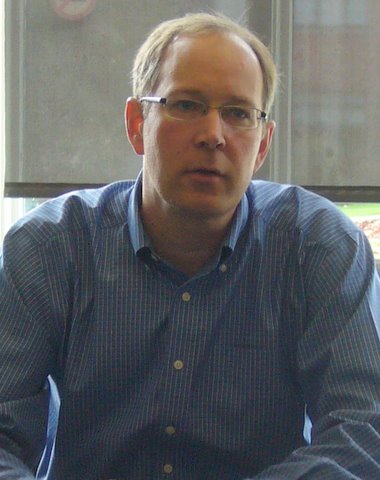
Professor Brad Dillman explains how illicit markets frustrate reform in the Middle East.

The Slow Food UPS interest meeting featured real caramel apples. The liberty apples were supplied by Terry's Berries Farm, a local organic producer. The caramel was made from scratch by Maggie Arends and Diana Hawk.

Tuesday, October 24, 2006

Study in Oaxaca meeting on 10/25

Come find out about the UPS partner semester abroad program in Oaxaca, Mexico, Fall Semester 2007. Learn about studying development, culture, and social justice in this beautiful colonial city in southern Mexico, surrounded by pre-Columbian ruins and indigenous cultures.

Wednesday October 25 in Wyatt 203 @ 4:30pm

UPS study abroad advisors and professors Oswaldo Estrada, Pepa Lago and John Lear will be there to answer questions. Sponsored by International Programs, Latin American Studies and Foreign Languages and Literatures

Monday, October 23, 2006

Interview with Prof. Dillman by Maggie Arends

Professor Dillman will be presenting his research on illicit economies and reconstruction in Iraq, Palestine and Algeria on Wednesday, October 25 at Noon in the Trimble Forum. He sat down with me to briefly discuss his research interests and what he wants us all to know about the illicit economy.

Maggie: You will be presenting your research on illicit economies. How did you develop an interest in this topic?

Professor Dillman: I attended a conference at UCLA, where devastated economies in the Middle East were addressed as a whole. There were questions like, “How can we reconstruct?” Especially specific places like Palestine, like Yemen. This issue is incredibly complicated; it’s not just about giving aid or not giving aid, or getting peace or not getting peace. There is a question of how well, if at all, we can accomplish reconstruction, and I began to find answers in the ‘shadow’ economy. I have basically found that the ‘shadow’ economies make it much, much more difficult to reconstruct.

M: Do you think that the importance of illicit economies is largely ignored by the media, government, and/or academics? If so, why?

PD: Yes. That is to say, we are all aware of the role they play, but how we talk about is important. Also, there is a question of who is currently talking about it—criminologists discuss the role of the illicit, but it is not a widespread phenomenon in other areas of academic study. IPE scholars in particularly do not have the tools as of yet, and they are a little late in approaching this issue. Yes, there is often talk of terrorism, of money laundering; I am trying to unite and re-frame the issue under one banner of the illicit. I feel especially that this issue is very neglected in Middle Eastern economies. There is much writing about democracy, culture, religion, but I hope to illuminate the particular characteristics of the illicit within Middle Eastern societies.

M: What knowledge would you most like to impart to students and professors at UPS? How can they find out more about the illicit economy?

PD: Take my course [laughs]. Or, wait two years. I’ll have a book out by then. I also recommend “Illicit: How smugglers, traffickers, and copycats are hijacking the global economy” by Moises Naim. Look, I want everyone to know that we are tied to the illicit even in this region. We are not removed from it. The consequences will affect us eventually—we are not just buying oil, or donating foreign aid; we are more than likely participating in the illicit economy, even with seemingly innocent monetary exchanges.
Friday, October 20, 2006

Congress-Bundestag Youth Exchange

This federally funded scholarship to Germany is a unique opportunity for students and young professionals between the ages of 18-24 to work and study in a foreign country. The one-year cultural exchange is designed to give 75 Americans an understanding and knowledge of everyday life in Germany by living with a host family, studying at a German university, and working in a German company or organization.

The program is designed primarily for those in business, technical, vocational and agricultural fields, although applicants in all fields are encouraged to apply. Strong interest in German and international affairs is essential, although German language skills are not required to apply.

The program has three components: a two-month intensive German language course in Germany; four-month study at a German university or professional school; and a five-month internship with a German company or organization in the participant's target field. For the duration of the program, participants live with German host families or in shared-apartment situations.

For more information
Email: cbyx@cdsintl.org URL: www.cdsintl.org/cbyx

Summer Research Grants

It is not too soon to start thinking of a project for a 2007 summer research grant. The IPE Program gives one $4000 summer grant each year to fund independent study research. You can read about the requirements and see a list of the previous winners by clicking here.
The university also provides funding for summer research grants. Click here to read about these summer grant programs.
The deadline for the IPE grant proposals in March 2, 2007. The deadline for the university's grants in March 22, 2007. The IPE deadline is earlier so that we can provide constructive feedback to students who are not awarded the IPE grant, which we hope will help them write even better proposals for the university competition.
The IPE summer research grant is funded from the royalties generated by the IPE textbook project.

Thursday, October 19, 2006

JET Recruiter at UPS on 11/9

The Japan Exchange and Teaching Program will have recruiters on campus Thursday, November 9, 2006. The JET Program offers an opportunity for graduates to experience life abroad. By living and working in Japan for a year, students will not only gain a better perspective of another country, but also of themselves and their own country. For more information about JET click here or email to jet@cgjapansea.org

Thursday, November 9, 2006

INFORMATION TABLE: Public Service (Non-Profit & Government) Education , Art & Natural Science Fair) Wheelock Student Center, Marshal Hall 4 – 7 PM

INFORMATION SESSION:MacIntryre Hall, Room #309 6 – 7 PM

Wednesday, October 18, 2006

Slow Food UPS Information Meeting 10/24

Come enjoy home-made carmel & organic local apples and hear about a new club on campus October 24th at 7:00 pm. We welcome anyone who has an interest in good food, conviviality, environmental sustainability, foodstuff conservation, and the anti-Fast Food movement in general. We will discuss the International Slow Food Movement and future activities, like shared meals, work with UPS's organic garden, excursions to local farms, and Wine tasting events. Bring your ideas about possible events-- this is a great opportunity to get involved on campus! We will meet upstairs in the Sub in Room 202.

Tuesday, October 24 at 7:00 pm in WSC 202.
Learn more about the Slow Food movement at www.slowfood.com

Post Graduate Fellowship at McGill University

Graduating seniors and recent IPE alumni may be interested in the Sauve Scholars Fellowship, which provides funding for up to 14 young leaders from all over the world to spend eight months studying global problems at McGill University in Montreal, Canada. The fellowship is valued at up to CDN 30,000. Application deadline is December 31. For full details go to http://www.sauvescholars.org/

Tuesday, October 17, 2006

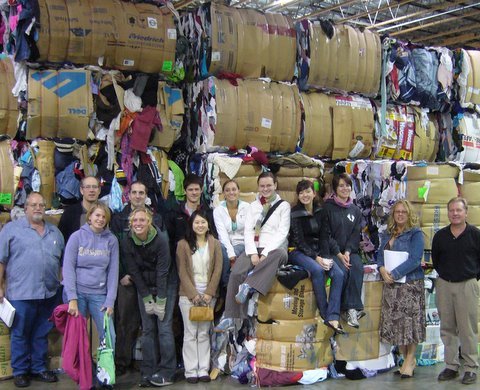
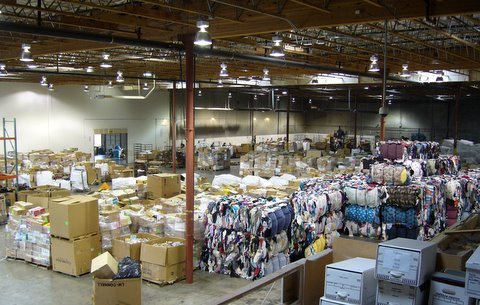
115 Million Pounds of Second Hand Clothes

Eight students and three IPE faculty members visited the Savers Recycling warehouse yesterday, where about 115 million pounds of secondhand clothes are exported each year to less developed countries, mainly in Africa. More information at http://savers.com/recycles/
Savers professionals Windy Gefre, Scarlet Leverett and Paul Stuart provided a very thorough and interesting introduction to the international trade in secondhand commodities and the global reach of this business. The field trip concluded with lunch at Vien Dong in Tacoma's Lincoln International District.

Friday, October 13, 2006

Nobel Peace Prize goes to Microfinance Innovators

Muhammad Yunnis and the Grameen Bank have been awarded the 2006 Nobel Peace Prize for their efforts to create economic and social development from below. For more details go to the Nobel Prize website at http://nobelprize.org/

Thursday, October 12, 2006

D.C. Summer Institutes & Internships

This summer: June 9 – August 4, 2007

Georgetown University, Washington, DC

www.dcinternships.org

Sponsored by The Fund for American Studies in partnership with Georgetown University, the Institutes combine substantive internships, courses for academic credit, career development activities, site briefings and lectures led by prominent policy experts.

Students applying by the Early Deadline of December 1, 2006 are given preference in admissions and scholarship decisions and will receive a 5% discount on their tuition balance.

  • Internships – Competitive placements with top sites in D.C.
  • Classes – Up to 9 transferable credits from Georgetown University
  • Housing – Furnished on-campus apartments in the heart of D.C.
  • Guest Lectures – With Washington’s top policy and industry experts
  • Site Briefings At the White House Complex, State Department, U.S. House of Representatives, and Federal Reserve
  • Leadership & Professional Development – Leadership, mentoring and career building activities
  • Networking – Interaction with hundreds of other student leaders from around of the world
  • Scholarships – Over half of all students receive full or partial funding based on merit and financial need

Four eight-week programs are offered in the following subject areas:

  • Politics and Economics
  • Journalism
  • Business and Government Affairs
  • Nonprofit and Community Service

For more information and an online application, please visit our website www.dcinternships.org or contact Mary Connell, Recruitment and Admissions Manager, at mconnell@tfas.org or 1-800-741-6964.

Click here for an informational brochure: https://www.dcinternships.org/tfas/brochure/index.asp

Prof. Dillman to speak on Illicit Economies and Middle East Problems

Professon Dillman on "Illicit Economies in Iraq, Palestine and Algeria: How Do They Threaten Reconstruction?"

Dillman places “shadow” actors and illicit transactions front-and-center in a political economy analysis of Iraq, the Palestinian Territories, and Algeria. His central thesis is that cross-border “shadow” networks imperil reconstruction in these violence-ridden, Middle East countries countries. Understanding the importance of illicit transnational networks allows us to better assess policy options and anticipate the roadblocks ahead..

Wednesday, October 25 at Noon in the Trimble Forum

IPE Grad School Fair on October 23

Association of Professional Schools of International Affairs Grad School Fair

APSIA (www.apsia.org) is an association of the top graduate schools in international affairs. You can view a list of the schools at http://www.apsia.org/apsia/members/allMembers.php?section=member

This event is a great way to learn about opportunities at these prestigious international affairs grad schools. Details and free registration at

http://www.apsia.org/apsia/admissions/forumDetails.php?ID=10

Monday October 23 at 4 p.m. Room 108, University of Washington Student Union,
HUB Student Union Building.

Tuesday, October 10, 2006

Global Youth Partnership for Africa Winter Break Program

In January 2007, Global Youth Partnership for Africa will be sending 25 Americans to join 25 Ugandan students in Kampala and Gulu, Uganda for the Global Kimeeza II: The Role of Youth in Post-Conflict Northern Uganda. At the same time, 20 Americans and 50 Sierra Leoneans will come together in Freetown, Sierra Leone for GYPA's first Youth Summit in the country: The Role of Youth in Post-Conflict Sierra Leone.

Both immersion trips will give participants an opportunity to explore first-hand the post-conflict reconstruction and reconciliation processes at work in these countries. The purpose of both summits is to engage and promote youth from the United States and Africa as leaders in the efforts to rebuild these two war-torn countries. Participants will participate in discussions regarding conflict resolution, economic development, rehabilitation and reintegration, HIV/AIDS, transitional justice, and gender issues, among others. Students with backgrounds or interests in any of the above fields are encouraged to apply!

Interested students may to apply to either one or both of the programs. Applications are due no later than November 1st, and applicants will be accepted on a rolling basis. Please refer to www.gypafrica.org to obtain the official program descriptions and to fill out an application. Please contact Katie Spencer for more information or an application (katie@gypafrica.org ).

Wednesday, October 04, 2006

Secondhand Bans: An analysis of policy restrictions on public smoking

Everyone is invited to a summer research grant presentation by IPE senior Diana Hawk. Diana writes of her research that "it details the political debates surrounding smoking bans, paying particular attention to California and Washington state's Initiative 901. My research also involves an economic analysis and explores the health debates regarding secondhand smoke."

1pm on Friday October 13th in Wyatt 301.

Monday, October 02, 2006

Joseph Stiglitz in Seattle on October 16

Shaping Globalization: Economic & Social Justice - Can We Have It All?
Nobel Prize Winner Joseph Stiglitz, Author and Nobel-Prize Winning Economist

Monday October 16 at 7:00 PM, Town Hall Seattle (1119 Eighth Avenue, Seattle 98101).

In today’s rapidly developing environment of global interdependency, the consequences of globalization have touched everyone world-wide. The debate surrounding globalization has inspired a number of reforms at the macro level, but are they working? What are the implications of globalization for developing countries? What are some alternatives to the current system of intellectual property rights? What reforms can be made to international institutions, including the World Trade Organization and the International Monetary Fund, to make them more effective, transparent, and responsive?

The World Affairs Council presents Joseph Stiglitz, acclaimed author and Nobel Prize-winning economist, at an evening lecture in Seattle on October 16, 2006 where he will address how globalization can reach its full potential and benefit people around the world.

Joseph Stiglitz was a member of the Council of Economic Advisers (CEA) from 1993-95 during the Clinton administration and served as CEA chairman from 1995-97. He then became Chief Economist and Senior Vice-President of the World Bank from 1997-2000. In 2001, he was awarded the Nobel Prize in Economics for his analyses of markets with asymmetric information. In addition to his extensive career in the field of economics, Stiglitz is also recognized as a leading economic educator and prolific author. His most famous work, Globalization and Its Discontents, has been translated into 35 languages and has sold more than one million copies worldwide. He currently lectures at Columbia University in New York and chairs its Committee on Global Thought.

http://www.world-affairs.org/calendar.cfm?eventID=734&action=eventDetails

Please register on-line at www.world-affairs.org or call the World Affairs Council at (206) 441-5910.