Friday, April 03, 2009

Spring 2009 Senior Thesis Defense Schedule

Students are invited to attend IPE senior thesis defenses. Please be respectful of the student presenters and do not interrupt a defense in progress.

Professor Dillman's thesis seminar meets in Trimble 112.

Date

Time

Name

Title

Tu 4/14

9:30

Ethan Taylor

Urban Evolution: The International Economy and the Global City

10:05

Inder Datta

The Mighty Military: Pakistan's Myopic Security Concerns and the Detriments to Its Society

Th 4/16

9:30

Sara Saunders

Islamic Feminism and Reform in the Maghreb

10:05

Max Silverson

Hezbollah, Israel and the Potential for Peace

Tu 4/21

9:30

Mia Palomo

Embracing Paradox: The Zapatistas’ Postmodern Revolution

10:05

Linsey Warren

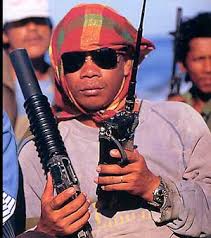
Somalia: Modern Day Piracy as Leverage for State-Building

Th 4/23

9:30

Nathan Sharpe

The New Rentier: Energy and the Russian Political Economy

10:05

Taylor Larson

Sovereign Wealth Funds: Nationalistic Fears and Global Refutations

Tu 4/28

9:20

T.J. Ersfeld

Chilean Government Support for the Forestry and Aquaculture Industries and the Negative Externalities

9:55

Will True

The War on Khat: Failed Attempts to Control the Production and Consumption of Catha Edulis in the Middle East and Northeast Africa

10:25

Brittany McManus

The Natural-Born Winner That Lost: How Multinational Corporations Have Destroyed a Quality Industry

Th 4/30

9:30

Wilson Cecil

Bubbly and Basmati: Evaluating the Importance of Culture in Geographic Indicators

10:05

Clinton Agresti

Culture Jamming and the Free Culture Movement: Resisting the Corporate Colonization of Culture


Professor Veseth's thesis seminar meets in McIntyre 320.


Discussants

Thurs 4/9

Kate Darlington

Slums of Sub-Saharan Africa: The Role of Civil Society in a Zone of Abandonment

Bret S

Meghan S

Beth Graves

The Impacts of NGO-State Partnerships on NGO Legitimacy in the International System

Steph S

Kelsey Q

Tues 4/14

Kelsey Quam

Natural Allies? Conservation, Development and Cultural Interests Between Indigenous Peoples and Protected Areas

Kerala H

Linnea J

Meghan Schimanski

Exploiting the Vulnerable: Alternative Explanations of Sex Abuse by UN Peacekeepers

Lindsay E

Beth G

Thurs 4/16

Lindsay Etheredge

Militarizing Mexico: The Failure of Force to Weaken the Grip of Drub Cartels

Kate D

Andrew M-M

Robin Wade

The WTO in Agriculture: The Future of the World Trade Organization in Agriculture, the Proliferation of Preferential Trade Agreements and the Implications on a New World Order

Dan A

Brittannia J

Tues 4/21

Kent Hamar

Financial Crises

Andrew M-M

Anna B

Steph Sievers

The Cacophony7 of International Standards: IFOAM's Mission to Harmonize the Organic Market

Beth G

Robin W

Thurs 4/23

Kerala Hise

Education & development

Kelsey Q

Kent H

Bret Schluederberg

LDC slums

Kate D

Brittannia J

Tues 4/28

Brittannia James

Intellectual Property Rights: Interpretation & Implementation

Bret S

Anna B

Linnea Johansen

Hindering South Africa's Development: The Ongoing Battle Against AIDS

Meghan S

Lindsey E

Thurs 4/30

Anna Beers

The Power of Visual Art: A Countermovement to the Market Economy and a Compliment to Fascism

Steph S

Linnea J

Andrew Miller-McKeever

The Proper Role of Financial Regulation: Crisis in Perspective

Kent H

Dan A

Tues 5/5

Dan Adler

One Nation, Many Possibilities: Growth Diagnostics and the Search for Constraints on Food Security

Robin W

Kerala H

If necessary


Professor Balaam's thesis seminar meets in McIntyre 309.

Apr 14: 7pm
Taylor Ash "The Economic Dichotomy of Change: How Western Politicies Fail to Fit Eastern European Economic Transition."
7:45 Ian Andrews, "The Financial Crisis and It's Impact on the Nuclear Energy Industry."
8:30 Leigh Barrick, "The Culture of Consumption: Analysis of the Role of Specialty Coffee in Mexico and Brazil."
Apr 28 7pm:
Rachel Meyer, "U.S. Aid in Colombia: Fuel for Two Wars."
7:45 Megan Schrader, "Agonistic Democracy in Response to the Multitude: A Post-Marxist Critique of Hardt & Negri."
May 5 7pm:
Madeline Priest, "Sustainable Forestry and Agriculture: The Future for Mexico and Brazil."
Kevin Nguyen, "Why Internet Censorship Doesn't Matter in China."

Thursday, April 02, 2009

Free Trade, Food Security and Migration in Mexico

Witness for Peace Northwest invites you to join us for a discussion with...

Baldemar Mendoza Jiménez, Agro-ecologist with the Union of Organizations of the Sierra Juarez, Oaxaca

Monday April 6 at 4pm in Trimble Forum.

Take a deeper look at the effects of NAFTA, including resistance to genetically modified (GMO) corn, the impact of migration on sending communities, and the struggle for food security in Oaxaca’s indigenous communities.

This event is open to the public.

Professional interpretation (Spanish-English) provided.

Tuesday, March 31, 2009

Dateline: Doha

A report from our man in Oman:

Hi everybody, this is Brendan Hammond. For those of you who don't know me, I'm an IPE student spending my spring semester studying abroad in the Sultanate of Oman. For our spring break over here, we have been taking an educational vacation around the Persian Gulf. I am currently writing you from Doha, Qatar.

Yesterday, on the other side of the world from Tacoma, we enjoyed a lecture from UPS Prof. Andrew Gardner - an anthropologist specializing in the Gulf States who works closely with the IPE department. Prof. Gardner is currently taking a two year research sabbatical, and is a visiting faculty member at Qatar University. His presentation was about the socioeconomic underclass of SE Asian laborers who comprise the base of certain gulf-state economies, in particular the Emirates, Qatar, and Bahrain, where they outnumber national citizens.

Prof. Gardner argued that, for "the lowest rung on the ladder," structural problems such as inaccurate information, unequal legal status, predatory lending in India, and constraints to labor mobility for these workers once they are in the gulf may cause a net flow of money from families in India to the gulf economies - the opposite of what is supposed to happen. We had long been eager to learn more about SE Asian workers, and immensely enjoyed his lecture.

Following the presentation, a lively discussion ensued that not only included students and Prof. Gardner, but a couple gulf nation citizens. A particularly interesting point of discussion was Prof. Gardner's suggestion that solutions associated with liberalism - such as full labor mobility, equal legal status, information transparency, and the need for gulf nations to represent themselves well on the world state - might be useful in improving the situation.

Along with this, he acknowledged that recommending liberal solutions was an uncommon position for an anthropologist to take, and he pointed out the awkwardness inherent in such a stance when these structural problems emerged within an economically liberal system.

Monday, March 30, 2009

Senior Dinner Sign-Up Deadline: April 1

Don't forget that the deadline to sign up for the 2009 IPE Senior Dinner is Wednesday, April 1, 2009. This faculty/student/alumni event if for all IPE majors who are participating in the May 2009 commencement.

Registration Advice: Don't Forget Advisor Approval of IPE Electives

Registration for Fall 2009 classes starts in Monday, April 6, so continuing IPE majors who are not studying abroad in the Fall should be meeting with their advisors this week.

When you meet with your advisor, be sure to talk about your IPE elective classes. The elective requirement for students using the 2007-2008 or later catalog is

Elective courses: Three courses (usually upper-division courses) in IPE or related disciplines. Elective courses must be pre-approved by the student’s IPE advisor in consultation with the student. A course used to satisfy this requirement may not also be used to satisfy a university core requirement. Elective classes should be chosen to:
  • Broaden or deepen the student’s understanding of IPE theory;
  • Provide economic, political, social or historical context for analysis of important IPE issues;
  • Provide specific expertise necessary for a student’s senior thesis research;
  • Develop analytical tools useful in IPE research;
  • Deepen knowledge of a particular country or region.
You will need to fill out an elective approval form for each on-campus IPE elective before they will show up on your Degree Progress Report and count toward graduation. (Study Abroad courses are approved through the normal study abroad application process).

Bottom line: Check your degree progress report to see your current elective status and be sure to work with your advisor to get IPE electives officially approved.

Pacific Northwest Microfinance Conference

Can YOU change Global Poverty?
The time to act is now. The tools to use start here.
Explore ways microfinance is making a difference globally — and get in the action at the 2009 Microfinance Conference.
Conference Highlights

Keynote speaker Matt Flannery, founder of Kiva
Friday, May 8, 7–9:30 p.m.,
Saturday, May 9, 8 a.m.–4:30 p.m.


Plenary and Breakout Sessions Featured Speakers
  • Rick Beckett, Global Partnerships
  • Tamara Cook, The Bill and Melinda Gates Foundation
  • Skip Li, founder, Agros International
  • Atul Tandon, World Vision

Breakout Sessions
  • Getting in the Action: 10 Ways You Can Help
  • Microfinance and Faith
  • Microfinance in a Time of Economic Crisis
  • Globally Connected: Microfinance and Technology
  • And more ...
Registration and Costs
  • Includes dessert on Friday and lunch on Saturday
  • Early registration costs (before April 30): $40 general / $10 for students
  • Registration costs after April 30, $50 general / $20 for students

Register today for this Pacific Northwest gathering in support of global development.

Kelsey Quam '09 Awarded Peru Research Fulbright

Kelsey Quam (IPE '09) has been awarded a Fulbright research fellowship to study in Peru. Kelsey wrights that ...
My Fulbright focuses on textile production in the rural villages of the Cuzco region. I will study changes in the economic, social, and cultural environments of these communities as textiles are increasingly marketed and sold to international importers and the tourist market. I will focus on the weaving “revitalization” movement that has recently emerged in this region. Revitalization efforts include educational programs for weavers, the documentation and preservation of ancient patterns, and the use of hand-spun and naturally-dyed fibers in textile production. I will address the promises this movement offers to weavers, as well as new critical issues surrounding the movement that have been less studied. I will affiliate with the Center for Traditional Textiles of Cuzco and the Universidad Nacional de San Antonio Abad del Cusco.
Congratualtions to Kelsey!

Kristine Kalanges IPE '00 accepts AU Professorship

Kristine Kalanges (IPE Class of 2000) recently completed an unusual "double." She earned her Ph.D. in Government from Georgetown University and her J.D. from Yale School of Law. So what do you do with a double doctorate? Here's the latest from Kristine ...
... beginning in August, I will be an Assistant Professor in the Department of Justice, Law and Society at American University's School of Public Affairs in Washington DC. This is a dream job for me. The position is tenure track, and it's in a department that is structurally inter/multi-disciplinary; hence, I will have complete academic freedom with regard to my teaching and scholarship, and I will be able to continue engaging complex ideas and problems that defy disciplinary boundaries.

Congratulations to Kristine!

Wednesday, March 25, 2009

IPE Program Assistant Job Announcement

Would you like to work for the IPE Program next year and help organize our programs and events? If so, then you should apply to be the IPE Program Assistant.

This is a paid position with funding for about 5 hours per week at a wage of around $12 per hour. The IPE Program Assistant works with the IPE Czar and faculty to organize programs that enrich the experience of IPE students at Puget Sound (and other duties as required).

If you are an IPE major in good standing and you would like to apply for this position, send the following items to Professor Nick Kontogeorgopoulos (konto@ups.edu) by noon on Friday, April 3, 2009.
  1. Your name and contact information;
  2. A list of the IPE-related classes that you have taken;
  3. The names of two professors who know you well;
  4. A brief statement of why you would like to be the IPE Program Assistant (and why we should hire you);
  5. A specific proposal for an event or program that you would like to organize next year.
Thanks for your support!
Mike Veseth
IPE Czar

Tuesday, March 24, 2009

Emelie Kaye Peine to replace Dave Balaam

As most of you know, Professor Dave Balaam is retiring at the end of this academic year after a distinguished career at Puget Sound. Although no one can ever really take Dave's place in IPE at Puget Sound, we are very fortunate to have hired an outstanding new professor who will fill Dave's faculty position and bring her own distinct skills, interests and values to our program.

That new professor is Emelie Kaye Peine. Professor Peine earned her Bachelor of Arts degree in political economy and development at the Evergreen State College in Olympia, Washington. Her Masters and PhD degrees are in Development Sociology from Cornell University in Ithica, NY. Her doctoral dissertation is titled "The Private State of Agribusiness: The Public Authority of Private Regimes in the Soybean Industry of Mato Grosso, Brazil." She is currently visiting assistant professor at Deep Springs College.

Professor Peine's fall teaching assignment includes two sections of IPE 201 and one section of IPE 331: The IPE of Food and Hunger. We are all really pleased that Professor Peine will be joining us in the fall and we look forward to introducing her to all of you.

Monday, March 23, 2009

Dinner for May 2009 IPE Grads on April 9

IPE majors who are "marching" in the May 2009 Commencement are invited to the annual IPE Senior Dinner on Thursday April 9 from 6-8 pm in the Trimble Forum.

The event is free, but you must RSVP by Wednesday April 1 so that we know how much food to order. Sign up on the RSVP list on Professor Veseth's office door (Mc213M).

The senior dinner is an opportunity for graduating students to get together with their professors and a number of IPE alumni as the year draws to a close. It is a time to think back on what we have accomplished and to look ahead at what lies in the future. IPE alumni will be there to talk about their experiences and answer questions about that great mystery: life after Puget Sound.

The IPE program is pleased to provide a buffet dinner with options for both vegetarians and carnivores. "Dressy casual" attire is appropriate. Please arrive promptly at 6pm.

Be sure to sign the RSVP sheet as soon as possible and watch your email inbox for more information.

Friday, March 20, 2009

And the Winners Are?


Zoom ahead to about the 2:20 mark in this video to see Nick Martins (a Puget Sound English major) and Kevin Nguyen (English and IPE), editors of The Bygone Bureau, an online journal of modern thought, accept the South by Southwest SXSW "best blog" award. Congratulations to Nick and Kevin!

Friday, March 13, 2009

Power Relations Inside Israel talk on 3/23

Everyone is invited to a talk at 5pm on Monday March 23 in Wyatt 101 by visiting scholar David Wesley, PhD: "Jews, Arabs, and Israeli Government Officials: Power Relations Inside Israel."

David Wesley is an anthropologist who lived on an Israeli kibbutz for more than thirty years. He continued his studies and received his PhD in 2002 from Tel Aviv University; his book, an expanded version of his thesis, is State Practices and Zionist Images: Shaping Economic Development in Arab Towns in Israel, published in 2006 by Berghahn Books.

Sponsored by Politics and Government, International Political Economy and Comparative Sociology. Thanks to Patrick O'Neil in P&G for taking the lead in organizing this event.

Wednesday, March 11, 2009

2009 Summer Research Fellowships

The International Political Economy program is pleased to announce that Ryan Donahue ('10) and Kendle Bjelland ('10) have been awarded $4000 summer research grants. Funding for these grants comes from royalties from the IPE textbook project.

  • Ryan Donahue, "Transforming Integrated Conservation and Development: Alternatives to a State-Sponsored Green Revolution in Madagascar." Ryan's grant is for academic research on this important topic this summer.
  • Kendle Bjelland, "Local Food Networks: From Bourgeois Vanity Gardens to Grassroots Revolution." Kendle's project builds upon work she did on food sercurity policy and the global/local food nexis in her Switzerland study abroad program. She will combine academic research with fieldwork this summer in Detroit and Chicago, where strong local food networks have emerged.
The IPE program received nine applications (the most ever), so competition for this grant was very intense. If you did not get an IPE award (or didn't apply but are interested in summer research funding) you should think about applying for one of the other grants available. Details can be found here http://www.ups.edu/x18564.xml Application deadline: Friday, March 27.

Congratulations to Ryan and Kendle and to everyone who applied for a 2009 grant.

Friday, March 06, 2009

Global Economic Crisis Discussion

Professors Alva Butcher, Leon Grunberg and Mike Veseth joined former CNN/London editor Todd Benjamin ('73) on Monday, March 2 for a discussion of the continuing global economic crisis. Click on the image below to view the program


Video feed supplied by TV Washington

Friday, February 27, 2009

Kiva.org Microfinance Founder to Speak on 3/7

Georgina Allen (IPE '08) sends this invitation:

Please join SeaMo (Seattle Microfinance) at Town Hall in Seattle as we host Matt Flannery, the CEO and Co-Founder of Kiva.org, at 7pm on March 5th. Matt will discuss microcredit as a means of poverty eradication, how technology helps facilitate development, and Kiva’s plans to continue innovating. Tickets are limited, so purchase now at Brown Paper Tickets.


Kiva is an innovative peer-to-peer microcredit site that enables individuals to make small loans to microentrepreneurs around the world. Matt has been featured on Oprah, written about in Bill Clinton’s book, Giving, and lauded on the CNN Heroes program. Matt began developing Kiva in late 2004 as a side-project while working as a computer programmer at TiVo, Inc. In December 2005 Matt left his job to devote himself to Kiva full-time. As CEO, Matt has led Kiva’s growth from a pilot project to an established online service with partnerships across the globe and millions in dollars loaned to low income entrepreneurs.


Students who are interested in carpooling in a UPS van can contact Georgina Allen by Tuesday March 3rd. Gallen@ups.edu


Where: Town Hall 1119 Eighth Avenue Seattle, WA 98101

When: 7pm, March 5th (doors open at 6:15pm)

Price: Students $5 General $10

Event Information: Ryan Calkins ryan@seattlemicrofinance.org or http://www.seattlemicrofinance.org/seamo-presents-matt-flannery-co-founder-and-ceo-of-kivaorg/2009/01/16

Thursday, February 26, 2009

NGO-Business Brown Bag on 3/4


Professor Pierre Ly will present his research on NGO-business partnerships at the IPE Brown Bag forum at 1pm on Wednesday 3/4 in WSC 101. Everyone is welcome to attend this interesting presentation.

Economic Crisis Discussion with Todd Benjamin '73

Todd Benjamin (Puget Sound '73) will lead a discussion of the continuing financial and economic crisis at a special event on Monday, March 2 at 7pm in Kilworth Chapel. Benjamin is the former chief financial editor at CNN London and has broad and deep experience reporting and commenting upon global economic and financial issues.

Benjamin and a faculty panel (including Profs. Alva Butcher, Leon Grunberg and Mike Veseth) will exchange questions and views with the audience. University of Puget Sound President Ron Thomas will host the interactive evening. The public and the media are welcome to attend the free event.

Tuesday, February 24, 2009

Peace Corps on Campus 2/25

Wow! Wednesday Feb 25 is a busy day. IPE students have the Brown Bag discussion at 1pm and the Financial Crisis Forum at 5pm (see below). Now this just in from the Peace Corps:

Here’s your chance to get the latest updates on the Peace Corps, on all available Peace Corps assignments around the globe, and on how to become a more competitive applicant. Peace Corps service is the opportunity of a lifetime and a great way to get two years of international experience under your belt upon graduation. There are also opportunities to pursue a graduate degree during or after Peace Corps service. Erin Carlson, UPS 2004, Peace Corps recruiter and returned Peace Corps Volunteer, will be hosting these events. Anyone who is interested in learning more about the Peace Corps – voted by college graduates around the nation as one of the top five most desirable organizations to work for in 2007 * – is welcome to attend and ask questions. Please feel free to bring friends and family.

Information Session:
How to Make Yourself More Competitive for Peace Corps Service
Wednesday, Feb. 25
5 – 6 p.m.
University of Puget Sound
McIntyre Hall (Room 203)
1500 N. Warner St.
Tacoma, WA 98416

Information Table
Wednesday, Feb. 25
10 a.m. – 4 p.m.
University of Puget Sound
Wheelock Student Center
1500 N. Warner St.
Tacoma, WA 98416

Look HERE to find out more information about upcoming events!

Click HERE to begin the application process!

The Peace Corps needs Volunteers from a variety of backgrounds to fill assignments in education, agriculture, the environment, business, health, IT and community services. Come and learn how your skills can be put to use in the Peace Corps.

Are you ready to take the next step? Apply now at peacecorps.gov/application to begin your conversation with the Peace Corps. If you need any assistance with the application, or if you have any questions at all, you can call 800.424.8580 and ask to speak to a regional recruiter. Without exception, every regional recruiter in our office also served as a Peace Corps Volunteer and has firsthand knowledge of what it was like to go through the Peace Corps’ entire application, screening and selection process.

* Business Week -
May 11, 2007

Contact: Erin Carlson

Wednesday, February 18, 2009

Financial Crisis Forum at 5pm on 2/25

Financial Crisis Forum: What’s Ahead for the Economy?

5pm Wednesday February 25

Vander Ende Forum (McIntyre Hall 103)


An off-the-record discussion of the continuing financial and economic crisis featuring commentary by:


  • George Matelich ('78), Managing Partner, Kelso & Company, New York

  • Deanna Oppenheimer ('80), Chief Executive of UK Retail Banking, Barclays Bank, London

  • Ken Willman ('82), Chief Legal Officer, Russell Investments, Tacoma

Moderated by President Ronald R. Thomas and Professor Mike Veseth

Presented as a service to the campus community. Seating is limited and open to members of the campus community only.


Feminist Critique of IPE at 1pm on 2/25

Prof. Cynthia Howson will lead a discussion of "Market Women and a Feminist Critique of IPE" at the IPE Brown Bag event on Wednesday, 25 February at 1pm in WSC 101.

Prof. Howson has done extensive fieldwork studying market women in Senegal. Everyone is invited to attend this interesting talk.

Sunday, February 15, 2009

Summer Research Grant Deadline Approaches


The deadline to apply for the 2009 IPE Summer Research Fellowship is Noon on Friday, March 6. We'd like to get some idea of how many students plan to apply for the $4000 grant, so please send an email to ipe@ups.edu if you are working on an application.

Friday, February 13, 2009

Spring Career Fair on Wednesday, February 18

Students are encouraged to attend the Spring Career Fair on Wednesday, Feb. 18, 4 to 7 p.m. in WSC Marshall Hall. http://www.ups.edu/x12576.xml

Students from all classes and majors can benefit from meeting employers face-to-face. It’s never too early for students to begin gaining exposure to career fields and practice interacting with professionals. The Career Fair is an easy way for them to get that experience.
Full-time, part-time, and summer job and internship opportunities are available.

Wednesday, February 11, 2009

IPE on the Potomac

Perhaps it is not surprising that so many IPE students end up in Washington DC. Here is a photo from this week's DC-area Puget Sound alumni event. Left to right: Walid Zafar ('08), Natalie Fish ('08), Colleen Dyble ('00), Ron Thomas (esteemed President), Svetlana Matt ('06), Lindsey Bonner ('03), Rahul Madhavan ('08) and Christopher Turillo ('02). Not shown: Ryan Polich ('00), Joesphine Eckert ('05) and Mike Elliott (('05).

And the Winner Is ...

The Bygone Bureau, an online journal of modern thought that is edited by Nick Martins (a Puget Sound English major) and Kevin Nguyen (English and IPE) is one of four finalists for the South by Southwest SXSW "best blog" award.

Congratulations to Nick and Kevin (who will travel to Austin for the awards ceremony) and to the many student contributors. This is really major-league recognition of your work. Nice job.

Tuesday, February 03, 2009

What's New at Kittredge Art Gallery? Food for Thought

Maybe it is about time you walked over to the Kittredge Art Gallery on campus. Two fantastic exhibits this month. The first is inspired by the Port of Tacoma (that's the IPE connection). "One Week" by Mary Iverson is a multi-media examination of a week in the life of Tacoma's Port.

The second exhibit (in the fireplace gallery) is by retired UPS art professor Bill Colby. It is called "Skyward." Food for the mind ... and the soul. Are you hungry yet?

Thursday, January 29, 2009

Agribusiness, Global Public Health and State-Market Formation

Everyone is invited to attend these upcoming research presentations by candidates for the IPE faculty position.

Friday, January 30 at 4pm in Mc307.
EMELIE KAYE PEINE (Ph.D. Candidate, Cornell University, visiting professor Deep Springs College) will discuss "The Private State of Agribusiness: Brazilian Soy on the Frontier of a New Food Regime."

Wednesday, February 4 at 4pm in Mc309.
HADII MAMUDU (Ph.D. West Virginia University, Post-doctoral fellow, Center for Tobacco Control Research and Education and Institute of Health Policy Studies, University of California at San Francisco) "Tobacco Control: A Global Public Health Issue."

Thursday, February 5 at 4pm in Mc307.
ABHISHEK CHATTERJEE (Ph.D. Candidate, University of Virginia, visiting professor at Goucher College) will discuss "State Formation and Market Formation in Comparative and Historical Perspective."

Sunday, January 25, 2009

IPE Book Recycling Program Expands

Most readers of this blog are familiar with the IPE Book Recycling program that takes place around finals week each semester. In cooperation with ReadingTree.org, a local NGO, the IPE progam seeks donations of unwanted books of all kinds. Puget Sound students, faculty and staff have donated more than 10,000 books in the last four years!

ReadingTree takes the books you donate and sorts them into three groups. Some books are too badly damaged to be useful to anyone -- these books are recycled responsibly. A small number of books have a significant market value -- they are sold on the internet. The money raised from books sales is used to distribute the rest of the books to reading programs in the United States and to community and school libraries in Less Developed Countries.

Focusing on book donations during finals week (when students look for good ways to recycle out-of-date textbooks) has been very successful, but what if you want to donate a book at other times? ReadingTree and the University have found a solution to this problem. A secure permanent recycling station has been installed at the South end of Wheelock Student Center near the parking lot (see photo). Now you have no excuse. Don't send that unwanted book to the landfill. Recycle it.

The IPE Program would like to thank the following staff members for their help making this new collection system possible: Barbara Racine, Sarah Comstock and James Vance.

We'd also like to thank these IPE students (and UPS crew team members) for their hard work in December to publicize the book recycling project and haul heavy boxes of books to the collection points: Laura Thomas ('10), Ryan Donahue ('10), Amory Genter ('10), Dash Gordon ('11) and Alex Mann ('11).

And, of course, thanks to everyone who has donated books to the program.

Thursday, January 22, 2009

A Busy Week in IPE! Money, Violence, Food and Sister Cities

It's going to be a busy week in IPE! Three interesting presentations. Mark you calendars.

Brown Bag on Person-to-Person Diplomacy
Dan Adler (IPE '09) will report on his research on person-to-person diplomacy through the Sister Cities program at the Brown Bag discussion on Wednesday 1/28 at 1pm in WSC 101. Dan will discuss both his own research findings and address the challenge of doing fieldwork abroad. Dan's research was made possible by a $4000 IPE Summer Research Grant. Click on the link to learn more about summer research grants. The deadline for IPE grant applications is Friday, March 6, 2009.

Political Violence and Foreign Investment
4pm on Wednesday, 1/28 in Mc309
ANDREEA MIHALACHE (Ph.D. Candidate, Pennsylvania State University) will discuss "Firm characteristics and perceptions of threat from political violence." This is the first of four lectures by candidates for the faculty position in IPE.

Agribusiness and the New Food Regime
4pm on Friday 1/30 in Mc307
EMELIE KAYE PEINE (Ph.D. Candidate, Cornell University, visiting professor Deep Springs College) will discuss "The Private State of Agribusiness: Brazilian Soy on the Frontier of a New Food Regime."

Tuesday, January 20, 2009

Jess Martin '07 Moldova Peace Corps Project

Jess Martin (IPE '07) writes, asking for your help with a project in Moldova.

Peace Corps Volunteer Jessica Martin, a 2007 IPE and Economics UPS graduate is raising money to build a farmer's market in Coscalia, Moldova. Click here to read about the project and to contribute.

Coscalia is an agricultural town accessible via dirt roads in southeastern Moldova. The Saturday market is currently ad hoc, with farmers spreading out their produce on blankets and chasing away stray dogs.

The project will create a permanent market with tables on a cement floor and fencing near the center of Coscalia. Sellers will pay a small tax to maintain the market.

By supporting the project, you are improving conditions in a poor village and help to create a symbol that will spread to other poor villages. You can read Jessica's blog and see pictures of Coscalia at:
www.planetranger.com/moldova/

Martin will spend 27 months in Moldova, she began her service in September
2007. Martin is a 2003 graduate of Davis High School and a 2007 graduate of
University of Puget Sound in Tacoma Washington.

This is the description that can be found online-
Coscalia is an isolated agricultural town accessible via dirt roads in the
Southeastern corner of Moldova. Villagers create a market each Saturday by
bringing the farm and non-farm commodities they want to sell to the main
road through town, squatting over their goods to protect their tomatoes from
roaming dogs.

This project will create a permanent market in Coscalia with a cement floor, fencing, and tables on which to display goods for sale. The result will be a place for Coscalians to display their commodities, and can lay the
groundwork for more efficient buying and selling and foster community spirit. There is space near the center of Coscalia for the market.

The market will be more than a place to buy and sell. Residents know that they need economic development, and a permanent market is the first of many necessary steps to motivate Coscalians towards a well-defined economic development goal. By supporting this project, you are not only creating an official, sanitary and income-generating agricultural market for a poor village, you are also erecting a symbol of hope in an isolated town. Sellers will pay a small tax, with the funding supporting future community
development projects.

Monday, January 19, 2009

On the Road with IPE Alumni


Emily Noel (IPE '08 and currently a graduate student at the London School of Economics) met up with her friend Jessica Bruce (IPE'08), currently a Peace Corps Volunteer in Benin, Western Africa.

This photo shows Jessica and Emily riding atop a truck, Hatari style.

Sunday, January 18, 2009

Turn the Page on Poverty

Meghan Schimanski (IPE '09) writes ...
About 2 months ago I started volunteering with a Seattle based non-profit called the Community Empowerment Network (CEN). They currently have a project in the Brazilian Amazon teaching villagers job skills so that they can improve their livelihoods. The villagers are learning technology and other skills that can help them improve their businesses. CEN does not provide monetary help, only skills. Right now the organization runs with mostly volunteers, except for 1 full time employee working in Brazil.

To help raise more money the CEN is working with a large online retailer that we aren't allowed to put in print, other than on the website www.turnthepageonpoverty.org. Four percent of the purchases made through the link on this website go to CEN, helping them raise money. Once you go to turnthepageonpoverty.org, there is a link to the retailer and your purchases will be made in the name of CEN.

You can read more about the organization on this website, or go to their actual site at http://joomla.communityempowernet.org. So the specific reason for writing this email is to spread the word about raising money through this retailer.

Thursday, January 15, 2009

Volunteers Needed: Lunch with Faculty Candidates

The IPE program will host found candidates for an IPE faculty position in the coming weeks. It is important to us that students have an opportunity to meet our candidates informally -- both to provide us with feedback on the candidates and also to give the potential faculty members an opportunity to meet our wonderful students.

So we are looking for a few IPE majors who would be willing to take the candidates to lunch in WSC (using the IPE meal card, of course!). Here are the days/times we have scheduled:

Wednesday 1/28 from 12-1pm.
Friday 1/30 from 1-2pm
Wednesday 2/4 from 1-2pm
Thursday 2/5 from 11:00 - 12:30 pm.

Can you help with this important task? If so, please come to Professor Veseth's office (Mc213M) and sign up on the form on his door. Thanks in advance for your help!

New Venue for IPE Brown Bag Series

The IPE Brown Bag discussion series will return on Wednesday January 21 at 1pm with Professor Brad Dillman's presentation about Somali Pirates (see next post).

The Brown Bag series is moving for this term from its old home in the Murray Boardroom to a new venue: WSC 101. This is the room at the very back of Marshall Hall -- near the booth at the fireplace end of the room. I would like to say that "you can't miss it" but in fact it is pretty easy to overlook this space, so make a special effort to find it!

And watch this space, too, for news about upcoming IPE programs and events.

Monday, December 15, 2008

Somali Pirates Brown Bag 1/21

Mark you calendars! The IPE Brown Bag series will resume on January 21/2009. IPE Professor Brad Dillman will present “The Somali Pirates: Confronting International Norms, Maritime Transport, and the World’s Neglect”

Prof. Dillman will discuss the challenges that Somali pirates are posing to shipping in the Gulf of Aden and what their actions reveal about failed states, international law, and the responsibilities of powerful countries.

1:00 pm on Wednesday January 21 in WSC 101.

Recommended Reading for Winter Break

We asked the IPE professors if they could recommend one book or article for student reading over the break. Here are some of their suggestions:

Dave Balaam:
James K. Galbraith, The Predator State: How Conservatives Abandoned the Free Market and Why Liberals Should Too. Title say it all. Nice summary of current issues swirling around financial and crisis of the market (the real issue as I see it). Easy to read with many points to debate--or at least consider.


Brad Dillman:
The Decline And Fall Of The British Empire 1781-1997. By Piers Brendon. Illustrated. 786 pages. Alfred A. Knopf. $37.50.Review at http://www.iht.com/articles/2008/11/22/arts/idbriefs22A.php

Even if one doesn’t read the whole book, there are fascinating chapters on different parts of the world where the British left their mark. Important history that every IPE student should know!


Cynthia Howson:
I recommend checking out
www.voxeu.org for easy to read explanations of hard to read research. One that I enjoyed is Nathan Nunn's "Historical Origin's of Africa's Underdevelopment" available at http://www.voxeu.org/index.php?q=node/779.

The published paper is: "Historical Legacies: A Model Linking Africa's Past to its Current Underdevelopment," Journal of Development Economics, Vol. 83, No. 1, May 2007, pp. 157-175, available here: http://www.economics.harvard.edu/faculty/nunn/files/legacy_jde.pdf.

Mike Veseth:
Harold James, The End of Globalization: Lessons from the Great Depression. Princeton University Press, 2001.

Things fall apart, the center cannot hold. I'm thinking a lot these days about parallels between our current problems and those of the 1930s. James is not an easy read, but a rewarding one in terms of insights. If time is short, the introduction and conclusion are worth the candle for sure.

Monica DeHart:

For those who want a novel, I'd recommend Aravind Adiga's book, White Tiger, the winner of the 2008 Man Booker award. It graphically describes the dark underside of India's economic miracle showing how caste, class, and corruption shape life in the countryside, the nation's capitol, and new technology hubs like Bangalore. Problematic at times, it is nonetheless a provocative read that generates lots of interesting questions about the sociopolitical dimensions of development . Read a review at:
(For those who'd like a more complex, nuanced, and far lengthier read on Mumbai, I'd highly recommend Vikram Chandra's Sacred Games.

Friday, December 12, 2008

Summer Non-Profit Institute Opportunity

Here is an interesting opportunity for students who want to work in the non-profit sector. You can find information about other summer study/internship programs in Washington DC and around the world here
http://www.dcinternships.org/index.asp


INSTITUTE ON PHILANTHROPY AND VOLUNTARY SERVICE

This summer: June 6 – August 1, 2009 Georgetown University, Washington, DC

www.DCinternships.org/IPVS

****PRIORITY DEADLINE FOR SCHOLARSHIPS – FEBRUARY 5, 2009***

Students are encouraged to apply by the priority deadline of February 5, 2009 for this summer’s Institute on Philanthropy and Voluntary Service. The institute is a dynamic summer program for undergraduate students interested in volunteerism and careers in the nonprofit sector.

This fast-paced Institute offers a rigorous combination of professional experience, academic learning and service projects that will provide students with an unparalleled experience in the nation’s capital.

· Internships – Competitive placements with leading nonprofit organizations

· Classes – Up to 9 credit hours from Georgetown University

· Housing – Furnished on-campus apartments

· Service – Variety of hands-on community projects

· Guest Lectures – With Washington’s top nonprofit executives and scholars

· Leadership Development – Leadership, mentoring and career building activities

· Scholarships – Over half of all students receive full or partial funding

· Networking – With hundreds of other top student and nonprofit leaders from around the world

Applications will be reviewed and accepted on a rolling basis until the final deadline of March 5, 2009. For more information on this exciting opportunity or to start an online application, please visit the website at www.DCinternships.org/IPVS.

Questions about the program or the application process may be directed to Mary Connell, Manager of Recruitment and Admissions, by phone at 1-800-741-6964 or via email at mconnell@tfas.org.

Thursday, December 11, 2008

Book Recycling Project Returns

The IPE program in partnership with ReadingTree.org is proud to bring back the book recycling project to our campus. Puget Sound students, faculty and staff recycled more than 7000 books through this program since 2005.

ReadingTree collects books and recycles them to reading programs for low income students in the United States and to
establish community libraries in developing countries. This keeps the books out of the landfill and recycles them to people who need them.

Usually the high cost of shipping books abroad dooms unwanted books to the landfill. The ReadingTree program sells some of the books it collects to raise money for shipping and handling costs. This makes the program economically sustainable -- a great advantage. The fraction of books that are so badly damaged as to be unusable are shredded and used to make recycled paper products. So the program supports environmental sustainability, too. And, of course, it gets books to people in the U.S. and less developed countries who could not afford to buy them.

Our project focuses on recycling surplus or unwanted books of all kinds. There are a lot of books that are discarded every year – we’d like to get those books into the recycling pipeline and keep them out of the landfill.

Watch for book recycling signs and recycling bins in WSC and other campus locations. The collection bins will be in place by Monday, 12/15. All of the collection areas will be in operation through finals week.

Thanks to the IPE majors on the UPS crew team (and especially to Laura Thomas) who volunteered to shoulder the burden of this program!

Spring 2009 Brown Bag Programs: Same Time, New Location

The IPE Brown Bag discussion series will resume on Wednesday, January 21, 2009 at the same time but in a new place. The programs will continue on Wednesdays from 1:00 - 1:50 pm as in the Fall semester. The new location is Wheelock 101 -- the meeting room at the end of Marshall Hall near the Logger Fireplace.

Do you have ideas for Brown Bag programs? Send your thought to ipe@ups.edu

Thursday, December 04, 2008

Foreign Service Coffee Hour on Tuesday 12/9


Are you interested in a potential career in the U.S. State Department's Foreign Service. If so, be in the Diversions Cafe at Noon on Tuesday, December 9 to have coffee with Amanda Jacobsen. (Note change of date).

Mandy Jacobsen (IPE Class of 1999) recently finished her first Foreign Service tour of duty in Togo. She and her husband Cort Weber (also IPE 1999) are now headed to Nepal after some months of training in Washington DC.

Mandy and Cort are happy to talk with any interested students about Foreign Service opportunities during their brief visit to Tacoma.

Tuesday, December 02, 2008

IPE Summer Research Fellowship 2009

Each year the IPE program awards one or more $4000 summer research grants. Now would be a good time to begin thinking about potential projects. You can find the details of the IPE grants here. The application deadline is Friday, March 6, 2009.

IPE majors are also encouraged to apply for Summer Research Awards provided by the University Summer Scholar and Richard Bangs Collier Scholar programs.

Funds to support the IPE Summer Research Fellowship program are provided by royalties from the IPE textbook project.

Alumni Update: Sarah Brabeck, PCV in Ghana


Here is a report from Sarah Brabeck, IPE 2005. Thanks, Sarah, for sharing your experiences with us!


In 2005, I graduated from UPS with an IPE degree was eagerly anticipating my leave to Ghana with the Peace Corps to put my class room learning to the real world test. I am embarrassed to say I immediately found myself paging through and atlas find exactly where Ghana was located and the official language spoken- french, english? English! The only thing I had really known about West Africa came from fragmented and dismally framed articles and excerpts that I approached with a challenged but limited understanding of the realities, good and bad, that surrounds African life in general. But I was interested in learning more beyond this, understanding development issues and their impact on a personal and community level and more specifically, on women, as coincidentally my senior thesis looked at how certain development policies and loan programs affected women in developing countries.


I left on the good advice many had shared with me: Have few expectations of what’s to come because those expectations will be combated and redefined daily, and remain open minded with an open heart. Also, be as resourceful, creative and innovative as humanly possible. Indeed, that advice held very true at every trying point in my service. A year after returning from my service, my biggest challenge has been defining a successful way to transfer that experience back here, where it can find a place and meaningful existence in my life and the part of the world where I belong.

I was assigned, as an environment volunteer, to a new site in the far northwest of the country with a traditional healer’s clinic, a small CBO (community based organization) that had a similar interest in managing their forests properly to protect their medical sources and other forest products that could generate income for the primarily agrarian society.


The day after I had arrived, my host agency had organized a elaborate welcome meeting with several members of the community, all eager to hear what I would bring to them and do to improve the quality of their lives. Yikes! I hadn’t come with money, or even technical knowledge about how to graft trees or raise rabbits. I had never farmed in my life. I had a loose three month training before I went to site where we skimmed over some basic environmental issues facing Ghana and West Africa- the 3 D’s- deforestation, declining fertility of the soils, and decrease the dependency of farming for income. All of which helped but proved vague and sometimes irrelevant to the specific issues and natural environment I found at my savannah site. Mostly, I learned to eat with my right hand with a forgiving family who has hosted new Americans several times. I am left handed. I did, however, have an eagerness to learn how and where to source out resources that could teach the technical stuff and a willingness to share the things I was proud of about America while better informing myself of a different way of life.


At first, I muddled around a bit holding meetings with unpredictable attendance, trying to better understand the specific needs, community dynamics and some viable solutions. After some time of observing and learning more about what worked and what didn’t while continuously strengthening my relationship with the community, I let the situation speak to me. It became more apparent to me who was more serious and motivated and I put more of my energies there. I finally got a solid group of women representing different parts of the community together who eventually started to self organize and collect dues to initiate certain endeavors.


We received some small loan assistance and started a bee-keeping project and a small tree nursery (which, unfortunately, I had learned recently collapsed because of some money mishandling). Our primary project was working with shea butter, a locally used cooking fat that is harvested from a nut on a tree, and learning about ways to improve the quality of the butter and identify markets for their product. The groups had registered for cooperative status enjoying more access to support from local government funds and donor agencies, and were trying to acquire machinery that would help with the arduous production process of the butter. Unfortunately, I was not there to see through the machinery acquisition but my replacement at site picked up where I left off (sometimes continuity can be a difficult thing for PC volunteers, so I am grateful that there was some crossover in our work!).


Upon returning two years later to the land of washing machines and iPods, I quickly became frustrated with what to do with myself and how to find an outlet for what I had experienced in Ghana. I was interested in maintaining the relationship I had made with my community but became frustrated that it wasn’t immediately available and concerned it was also too idealistic. I had shared stories about my work with shea with my parents and was impressed to see that my father was especially curious about the fat and began making a few products from it while I was overseas! Interested in learning more about what one could do with the product, I piggybacked on his work and began developing some body care products using shea I had taken back from my community. It occurred to me that this activity could turn into a business idea and I have been taking it more seriously since.


Recently, I went to a conference on shea butter and the market that linked me up with players of every level on the industry and learned more about the shea sector and market dynamics on this side of the world. Several members of the conference, including myself, are now working to start a regulatory council for shea that is being registered as a non-profit to encourage a grading system and certification process for shea butter. We feel this is critical as the American shea sector is still trying to define and realize its immense potentials for both the body care industry and the African women that produce it.


Although I don’t know how successful my ambitions will be, I finally feel as though I’ve identified a worthy outlet to share a part of Ghana that spoke to me, and in some way, honor the very women that make this possible.